Showing posts with label funny books. Show all posts

Tuesday, May 21, 2013

Global Issues searching, Animal Research, Veggies, and Funny Picture Books

PreK 3 & 4: Guiding Question: What vegetables do we know?

We had a veggie story time, starting off with naming different plastic vegetables. Then, a few stories!


Night of the Veggie Monster, by George McClements

The Veggie Monster appears (much to the bemusement of his parents) whenever a vegetable touches this little boy's lips. The histrionics he goes through are totally silly, and the mixed media pictures are lively and expressive. Most students agree that he's making a big deal out of nothing! What's a few peas, after all?


Little Pea, by Amy Krouse Rosenthal, illustrated by Jen Corace

This a favorite and Amy visited our school last year which was amazing. In this story, Little Pea is a typical youngster who likes to play with friends, snuggle with Mama, and play with Papa. At mealtime, too, he's pretty typical; he doesn't like to eat some parts of his dinner. But the parts he doesn't like are a little unusual - it's CANDY! After some whining and complaining, he eats all his candy and then gets dessert. 


Growing Vegetable Soup, by Lois Ehlert

Did you know that you can grow a soup? This story shows how a father and child plant the vegetables, care for them, harvest them, and then make a delicious vegetable soup. Neon-bright colors in chunky cut shapes grab our attention. Small black text naming each item provides extra information for those children starting to sound out letters.


Kindergarten: Guiding Question - What are some of our favorite funny picture books?


As the end of the year draws near, we focus on read-alouds that are just pure FUN. Here are some favorites from the week.


Mortimer, by Robert Munsch, illustrated by Michael Martchenko

Young Mortimer just won't be quiet at bedtime. Everyone in the family takes a turn marching up the stairs to yell at him to "Be Quiet!" but he just keeps on singing "Bang, Bang, Rattle and Clang" at the top of his lungs. Will he ever settle down for bed? 


This is lots of fun, especially if you can sing his song really loudly! The kids join in and we make a huge racket!


He Came with the Couch, David Slonim

In this bizarre tale, a family goes out to get a new couch and chooses one that already has a strange occupant on it. They try to get him (it?) off, but he won't budge. Since the couch is perfectly good, they work around him and even become fond of him. It seems that there's no way he'll ever get up. But one day, he surprises them all!


A Pet for Petunia, by Paul Schmid

This is picture book perfection: overall design is fresh and crisp, rough pencil sketches with lavender wash have great movement and expression, and the voice of our heroine, Petunia, is classic I-am-six-and-I-know-everything-except-when-I-learn-something-new. I LOVE Petunia!


Story: she wants a pet skunk, parents say no because they stink, she vehemently disagrees, and then...doesn't.


Grade 1: Guiding Question - How do we find information about animals?


Grade 1 students are creating a zoo in their classrooms, and they need to be able to tell lots of facts about the animal they're choosing to dress up as. We used PebbleGO, World Book Kids, and this symbaloo of National Geographic digital books to gather information. 


We used this template for our notes. Children drew a picture of their animal in the large box and added one fact in each of the other boxes. On the other side, they added more facts and did a picture with labels. I got the idea for this template here.


Grade 2: Guiding Question - What do myths teach us about human behavior?


In our traditional literature unit, we're reading myths and talking about how myths attempt to explain truths in nature or in human nature.


King Midas and the Golden Touch, told by Charlotte Craft, illustrated by K. Y. Craft

This is a classic retelling of the story of King Midas. We learn of his love for his daughter, his love for his gold, and meet the stranger who forever changes his life by teaching him a harsh lesson. The retelling is full of detail and the illustrations are lush. A beautiful book.


Cyclops, by Leonard Everett Fisher

A chilling story of Odysseus's brush with death, this makes a great read-aloud for grade 2 and up. After being blown off course as punishment by t he gods, Odysseus and his crew end up in the cave of an evil Cyclops. He eats several men and threatens to eat them all. They must find a way out of the cave, but it's always closed in by a huge boulder. When the men come up with a plan, the events take a graphic turn, but their cleverness is the greatest thrill in the story.


Grade 3: Indigenous People Research, Folktales and Books in a Series


Depending on the class, grade 3 students continued their research of their indigenous people group, read folk tales from South and Central America, or practice identifying similarities and differences in books in a series on a venn diagram. With MAP testing and various other programs as we head into the end of the year, the grade 3 classes will each be working on the same skills at different times. 


Grade 4: Check out


Grade 5: Guiding Question - How can we search for increasingly complex information for our Global Issues paper?


Students are past the definition stage of their issue (What IS global warming, What are examples OF animal cruelty, and so forth).
Now, they are exploring CAUSES and SOLUTIONS for their problem.

One search strategy they have been using with great success is the quotation mark strategy: when we want two or more words to be searched together, we put them in quotation marks.


"air pollution" 

narrows to just those articles that show air pollution as set topic.

We also learned to use the minus sign to omit results that we don't want.


"air pollution" -cars 

gives us results about air pollution other than air pollution caused by cars.

As we begin to look for causes and solutions, we can add these key words to our search.


"air pollution" solution*

"air pollution" cause*
The asterisk truncates a word which tells the search to find that word with any ending. In this case, it will find "solution" and "solutions" or "cause" and "causes". This broadens our search (and gives us a chance to talk about word endings and roots!).

Our grade 5 tab has several sites that are kid-friendly for finding out information about these complex topics.


Tuesday, August 23, 2011

Book Talk Tuesday: The Back to School Sillies

There's no better way to break the ice during the first week of school than by reading some silly picture books together. Here are three of my favorites, with a link to more back to school stories and some good choices for preschool here.

In the comments: What's your favorite back to school story?

Go Home, Mrs. Beekman! by Ann Redisch Stampler
A promise is a promise, so when Emily's mom vows to stay with her at school for a million gazillion years, that's just what she plans to do. Even though Emily and her teacher are begging the mom to go, she stays true to her promise. When will Mrs. Beekman go home!? 

Grades 1+ will love Mrs. Beekman's ridiculous tricks to try to stay at school, but the message of not needing our parents during those first days is the one that sticks.


Don't Be Silly, Mrs. Millie! by Judy Cox
The lucky students in this class have a teacher who keeps them on their toes and laughing all day long. At every transition, Mrs. Millie mis-speaks and the results are hilarious and encourage audience participation. She tells them, "Welcome, please come in and take off your GOATS." Her students correct her, "You mean our COATS!" Mrs. Millie says, "It's time to paint on the WEASEL" (No, Mrs. Millie, you mean the easle!)

Cartoony watercolor illustrations showing goats instead of coats, and a weasel instead of an easel make it even more silly. This is a great choice for grade 1+ since it gets everyone laughing and correcting the teacher.


Smelly Locker and other Silly Dilly School Songs,by Alan Katz
If you are up for singing and want to get kiddos giggling from the first day, this is a fun choice. Well-known tunes are set to lyrics about all the grim realities of school. Some favorites include "Heavy Backpack" (sung to "Oh Susanna"), "Passing Notes" (to "The Alphabet Song"), and "I Don't Want to do Homework" (to "Take me out to the ballgame"). 

Each song is short enough to sing through a couple of times and is accompanied by suitably silly colored pencil illustrations. 

Grades 3+ will appreciate the humor of this one.

Here's a sample from "I am in the Lunchroom" (to the tune of I'm a Little Teapot)

I am in the lunchroom, 
boy, I'm starved!
Wonder what kind of food they've carved.
Chicken, fish, or meat loaf? 
Maybe pork?
IT'S so hard it snapped my fork!


Sunday, May 29, 2011

Funny Reads, Miss Mary Mack, and Ladybugs!

Week 34

PreK 3, PreK 4, Kindergarten: Funny Book week #5

Bubble Gum, Bubble Gum, by Lisa Wheeler
This funny rhyming story has the same pattern as "The Mitten": each animal who comes along gets stuck in a melty wad of bubble gum. Will they be able to escape when a truck comes down the road? Only if they work together and only if they use the bubble gum!  Cartoony illustrations and a tap-your-toes beat make this a great choice for a preschool read aloud.


Little Bunny Foo Foo, by Paul Brett Johnson
A picture book to go with the song of the naughty bunny "Foo Foo" who bops forest animals on the head and keeps misbehaving, despite warnings from the Good Fairy. In this version, Foo Foo is using mud pies to bop the heads of foxes, muskrats, and even bears! The Good Fairy interjects among verses of the song to show her disapproval. She even engages the audience by asking questions like "Do you think he listened?" A fun read aloud (and sing-along) for younger students and a good mentor text for older students to show point of view and voice.


Grade 1: Guiding Questions - What do we know about ladybugs? How many text features can we identify on our own?

This was one of those fun times when everything comes together perfectly! No sooner did I choose the books for this week than someone showed me that my lovely Benjamin Fig tree has aphids. Imagine my delight! Now I could read about ladybugs and how they clean up a garden's aphid problem and SHOW aphids right here in the library! And of course, we are still working on mastery of our text features along the way. Stay tuned for a voice thread showing what we've learned.

What About Ladybugs? by Celia Godkin
This nonfiction picture book follows a gardener through the process of learning how the different bugs contribute to and harm his garden. When he decides to use pesticides to kill off the most destructive bugs, he inadvertently causes a bigger problem. His garden becomes infested with aphids and there are no ladybugs left to control the aphid population. A wonderful look at the interconnected way all creatures are needed to create a balance in nature. Colored pencil illustrations.


Grade 2: Guiding Questions - What are some rhymes we can use on the playground?

We learned some more hand-clapping and folk rhymes to finish up our traditional literature unit: "Miss Mary Mack" and "Double Double." We watched videos (on the grade 2 tab of the library site) to see how they are played. "Double Double" can be used with any compound word, so we had a quick review of what those are. We used baseball, ice cream, and hot dog among others.

We also learned some rhymes to help out with playground politics: rhymes to choose who is "it" and rhymes to deflect name-calling in a fun way.

by Joanna Cole
Here are some of our favorites for choosing who's "it"
"Each peach, pear, plum,
When does your birthday come?"
(Spell out month and count out date!)

"My mother and your mother were hanging out clothes.
My mother gave your mother a punch in the nose.
What color was the blood?"
(Spell out the color!)

Here are some of our favorites for name-calling:
"Twinkle, twinkle, little star
What you say is what you are"

"I'm rubber and you're glue;
It bounces of me and sticks to you."


Grade 3: Guiding Questions - How do we capture a screen shot?

Apple Key HDRphoto © 2006 Mikhail Esteves | more info (via: Wylio)We're still chugging along with our Dewey Advertisements, learning lots of computer skills along the way.

This week we learned how to take a screen shot. This will enable us to insert a picture of the website that fits with a Dewey section. We learned to press apple + shift + 4 to take a screen shot that lets us select the part of the screen we want.

Stay tuned! Next we put it all together!


Grade 4/5: Checking out and Reading workshop


Tuesday, May 10, 2011

World Legends, Funny Books, and Text Feature seek-and-find

Week 32

PreK 3, PreK 4, Kindergarten: Funny Book Week #3

Bark, George, by Jules Feiffer
George is a puppy who barks out the wrong animal sounds! When his mother takes him to the vet we quickly discover the problem: he has a duck, a pig, and a cow in his stomach! Will George be able to bark properly after they're removed? Fun surprise ending!


Good Boy, Fergus, by David Shannon
Expressive illustrations match with text that seems to jump off the page to show the relationship between an owner and his dog. Even though Fergus is loveable but naughty, his owner is ready to spoil him silly. Fergus runs away - owner begs him to come back. Fergus pees on every object in the street - owner says "good boy!" and so it goes until we realize that this owner is completely smitten with this spunky Highland terrier. And, by the end, so are we!


Marley Goes to School, by John Grogan
Marley feels lonely when little Cassie goes to school for the first time, so he decides to go to school too! What a ruckus he causes in his eagerness to find her, however. Crashing into trays of hot dogs in the cafeteria, photocopying his face in the teachers' room, and skidding through the hallways sets everyone on a hunt to catch him. Happily, he finds Cassie and she's so happy to see him that all his misbehavior is forgiven. The bonus of this book is the cute factor: Marley is adorable!


Grade 1: Guiding Question - What text features can we identify?
This week we put our learning about text features into practice with a seek-and-find using different nonfiction books. Students found headings, bold words, the index and glossary, table of contents, labels, and captions - all organizational tools that help us decide which parts of the book have the information we want. We talked about how these help us skip around through the information, as contrasted to chapter books which need to be read from start to finish.

Nonfiction!
Fiction!
Surprising Sharks, byNicola Davis
This feels like a picture book but gives good basic information about sharks. The premise is that not all sharks are big, mean, and dangerous! We learn about different types of sharks, some of their unusual talents, how endangered they are, and what products use shark parts (face cream!). A lively informative look at the much-maligned shark.


Grade 2: Guiding Question - What is a legend?

Students practice their summarizing skills and apply our definition of a legend to the stories on this site: Folktales and Legends Around the World. We define a legend as a story told over time that contains a grain of truth but cannot be proved. It is not as exaggerated as a tall tale, has human characters, and less magic than fairy tales. Many stories are given the label "legend" but we will apply our definition to see if we agree.


Grade 3: Guiding Question - What questions can we ask an author?

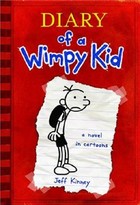
In Mrs. Ducharme's absence this week, grade threes watch an interview between Jeff Kinney (Diary of a Wimpy Kid author) and Jon Scieszka. Scieszka asks great questions and so we learn how Kinney got his ideas, how his work progressed and grew, about the technology he uses to create his drawings, and a bit about his personal life. This interview should get us ready to form questions for our visiting skype author: Eric Wight, creator of Frankie Pickle!


Grade 4: Guiding Question - What similarities and differences do we see between two authors?

Last week's study of Patricia Polocco's work is now compared and contrasted to the work of Allen Say. After whole group and pair practice, students study the same elements (illustration, author's style, and story structure) but now analyze independently. To introduce the new author, each group read one of Allen Say's books.

Grandfather's Journey, by Allen Say
The perfect third-culture picture book, this personal narrative traces a man's journey away from his home in Japan, to his travels and subsequent love for a new country, and the wrestling with homesickness for the old country, and back again to the longing for the new country. Beautiful watercolor paintings and simple language create a melancholy tone that resonates with anyone who has ever felt the loss of a sense of home.


Erika-San, by Allen Say
An American girl dreams of a life in Japan, but it takes her a while to find just the right spot in which to settle. She ends up on a remote island and devotes herself to learning the art of tea ceremonies. Gorgeous watercolors enhance a thoughtful story.


Grade 5: Poetry Practice
5D: Students rotated among three tables full of poetry books, tabbing poems to include in their poetry books. Mirror, Mirror - a book of poems based on well-known fairy tales written from opposing characters' viewpoints was a clear favorite. Also popular, any poetry by Langston Hughes.
5B: Students did a first read-through of the witches scene for their Arts Night, an evening focusing on poetry. Mr. B brought the black light and fluorescent "blood" made from highlighter ink. Creepy fun!
5K and 5W: Book check-out. These classes are in-process with poetry raps.