Showing posts with label poetry. Show all posts

Monday, April 29, 2013

Inferring, Tadpole-ing, Reciting, Dragon-slaying

PreK 3 and 4: Guiding Question - How do frogs grow?

Our weekly theme was "frogs" and there are lots of fun stories to choose from for this.


Growing Frogs, by Vivian French, illustrated by Alison Bartlett

A girl and her mother experiment with growing frogs. They bring home some of the eggs from the pond, put them in a tank, and watch and talk about what they observe. 

The information in this narrative nonfiction story is just the right amount for toddlers, and the illustrations are clear and cheery.


DVD: Seasons (Weston Woods)
Polliwog and Caterpillar, by Jack Kent

Caterpillar brags about her upcoming metamorphosis, and Polliwog is very happy for her. He learns that he, too, will be changing, but he's not sure what he'll become. He cheerfully waits for her transformation and while he's waiting...oh look what happens!


Kindergarden: Guiding Question - How does inferring help us understand a story better?


Click, Clack, Moo, by Doreen Cronin

The cows learn to type and use their new skill to demand better treatment from the farmer. The farmer is not giving in to their demands, so they go on strike: no milk! Eventually a negotiation yields them some success, but what about the farmer? He's still in a pickle. 

Inference task: What happened that put him back where he started?


Another Brother, by Matthew Cordell

This story perfectly captures the complexities of being the oldest sibling. Davy is blissfully alone with his parents for four years, but then siblings strike. They're all brothers (12 of 'em) and all the time they copy him and follow him around. Will he ever get some peace? Adorable line drawings with lots of detail and expression add to our picture of Davey's plight.

Inference task: How does Davy really feel about being the oldest and most copied sibling?


Yo! Yes?, by Chris Raschka

Two boys navigate those first moments of a possible friendship: the "want to be my friend?" that's so hard to express. Raschka's illustrations capture the tension of the moment: one boy so outgoing and ready to take a risk, the other's body language showing his fear and self-doubt. This would make a good story for the beginning of the year in our school where one-third of our students are new each year.

Inference task: "read" the pictures and expressions to describe the boys' feelings.


Grade 1: Guiding Question - Who was Josef Albers?


An Eye for Color, by Natasha Wing, illustrated by Julia Breckenreid

We learned about Josef Albers, who grew up in a coal-mining town in Germany and was fascinated by art from an early age. He experiments with many media but eventually came to study colors and the effect of their interactions with each other. 
http://www.albersfoundation.org/


Afterward, students looked at a website showing many of Albers' famous "color squares" and shared what they noticed about them.

Which colors "pop" or fade for you?


Grade 2: Guiding Question - What is the story of George and the Dragon?


Saint George and the Dragon, retold by Margaret Hodges, illustrated by Trina Schart Hymen

This tells the legend of St. George, the Red Cross Knight, and Una, the princess who finds him. She's been on a quest to find someone to save her village from a vicious dragon. The depth of description is powerful and story of how the dragon and George trade blows is intense.

Although longer than what we usually read in grade 2, the writing and illustrations are captivating, plus it's a bit gory. Beautiful use of border artwork and finely detailed faces make this story come alive. I was impressed with how well everyone followed the action of this classic tale.


Grade 3: Guiding Question - How can we read a poem with expression and show our understanding of rhyme and rhythm?


As a culminating activity, students came prepared to read a poem chosen for effective rhyme and rhythm. We talked about how to read with expression:

- follow the punctuation, not the line breaks to avoid a "sing-songy" feel.
- read for understanding, to communicate the ideas of the poem.
- use a variety of tones (vs. monotone)
- use an even volume
- use facial expressions (smile! frown!) to suit the poem.

As an example, I read "Doll", by Myra Cohn Livingston, two times: in a "regular" way, and then with expression that helped convey the story of the poem. 

Students practiced reading in pairs, wrote notes about the rhyme scheme and rhythm of their poem, and then recorded it all into Photo Booth. We used a "one take" rule since this was not meant to be a polished project, just a snapshot at the end of this mini-unit.

Here's an example of a student's "one take."


Grade 4 and 5 came to check out.


Saturday, April 20, 2013

The Circus, John Henry, and Inference practice

This was the week of the Boston Marathon bombing. I followed the news from home as much as possible, but it did not come up in conversation with students. Just as well; I trust those children who know the area are talking with their parents about it.

In the library, we continued with our various units. It was sunny (finally) and we shared lots of giggles and good stories.

PreK 3 and PreK 4: Guiding Question - What's a circus?


Circus!, by Peter Spier

The detailed pictures in this story make it best for one-on-one reading, but since it gives so much information, I use it as a "talk aloud" as we look at the pictures.

We learned about the work involved in packing, moving, unpacking, rehearsing, and performing. We also noticed how multicultural the circus troupe is: Japan, China, Hungary, Holland, New Zealand, Russia, India...so many countries are part of the story!


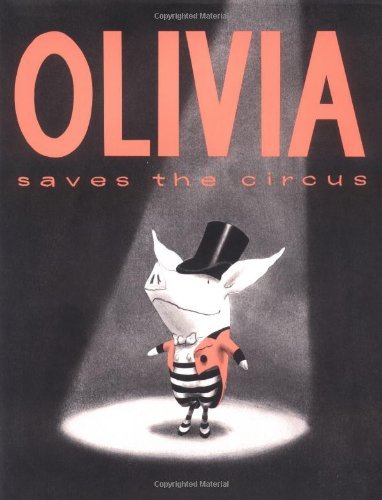
Oliva Saves the Circus, by Ian Falconer

The irrepressible Oliva charms us again as she spins a yarn for her class. She tells them that she went to a circus but that all of the performers were out sick "with ear infections." She was able to fill in for them...in ALL of the roles. Oliva the tattoo lady, lion tamer, and trampoline queen. It's fun to pretend along with her, and it's really hilarious when the teacher sees through her tall tale.


After the stories, we play "Clown Canon". (Hey...it's a good physics lesson!)


Kindergarten: Guiding Question - How can inferring help us understand a story better?

We continued to practice the skill of puzzling out a part of a story that the author hasn't directly told us. 


Billy and the Bad Teacher, written by Andrew Clements and illustrated by Elivia Savadier

Billy is a major rule-follower and it really irritates him when his teacher does things he's not supposed to do. So Billy decides to make a list of all of his teacher's transgressions and send the lists to some Very Important People! On the list? Chewing bubble gum, running in the halls, and falling asleep in a teachers' meeting, to name a few. But when it's time to send the list off to the Principal, Mayor, and US President, Billy has some doubts. What SHOULD the perfect teacher be like? His own answers surprise him!

Our inference task: Why doesn't Billy send the lists?


Blackout, by John Rocco

This recent Caldecott honor book shows a family's experience during a blackout. We infer many of the emotions of the night from the pictures. The youngest child in the family wants to play a game, but everyone is busy. After the blackout, they come together over candles and with their neighbors to share the excitement of the quiet dark city. 

When the lights come back on, little sister flicks them back off. Our inference task: Why does she?

Grade 1: Guiding Question - Who was Dave, the Potter? Who is Barak Obama?

This week, we looked at two African American men born 250 years apart. One is known only by his first name and was not famous during his own time. The other is the current US President.

I didn't realize these are illustrated by the same artist until I got into the story time!
Dave, the Potter, by Laban Carrick Hill and illustrated by Bryan Collier

Dave, a slave born in 1801, was a gifted potter. We watch him in his pottery shed as he moulds a lump of clay into a beautifully grand but simple jar. When it's finished, he signs it with his name, the date, and a short poem. One of the most engaging aspects of this story is the viewpoint the illustrator chooses: we're over Dave's shoulder or looking down directly at his hands as he works. It creates an intimate feeling giving us the sense we're part of the creation process.


Barack Obama, Son of Promise, Child of Hope, written by Nikki Grimes and illustrated by Bryan Collier

We learn about Barack Obama's childhood in Hawaii, his struggle to define himself, his family's value for education, the sadness he feels after his parents' divorce, and his final move into public policy and leadership. From an early age, he wanted to use his talents to help others. The illustrations are mixed media. 

In a story time setting, I cut parts of the story to move things along since it's a bit long for youngsters.


Grade 2: Guiding Question - What's a tall tale?

We watched a fantastic video about John Henry, the freed slave who blasted through a mountain to compete against the machinery brought in to do the railroad workers' jobs. Parts of his story have some truth to them, parts are exaggerated. This video shows the more truthful side.


John Henry and The Railroad from Whitestone Motion Pictures on Vimeo.


Grade 3: Guiding Question - How do we analyze a poem's rhythm?

This week, we studied rhythm in poetry and tried to unlock the key to how a poet creates rhythm from the words he or she chooses. To start us off, I read two poems with contrasting rhythms: "Lullaby for Suzanne" and "Shepard's Night Count", both found in X. J. Kennedy's Talking Like the Rain.

Here's the powerpoint I made to lead us through some concepts and practice. 

Next week, all grade 3 students will come to library time with a poem that has a clear rhyme scheme and a sense of rhythm. Students will read and discuss the poem in Photo Booth.

Grade 4 and Grade 5 checked out books as needed. Sometimes they come for reading workshop time, sometimes to read with buddies from younger grades, sometimes in pairs or threes for book recommendations or independent catalog searching. 

Checking out as needed = student ownership over their reading choices.

Monday, April 15, 2013

Rhyming, Inferring, and Jane Goodall

We are back in the swing of things after spring break. Welcome back, everyone!

PreK 3 and 4: Guiding Question - What forest animals do we know? What are the parts of a story?

For this week's theme, we talked about forest animals and practiced telling stories of our own. We read two books, then I gave each child a card with an animal on it (from Prekinders.com). 

In pairs, they tried to tell a little story about the animal: Intro (who is it), Problem, Solution. This is an easy version of "Someone, Wanted, But, So, Then". The stories tended to go like this: "This is Joe the squirrel, and he needed nuts, and so...." and then it went on and on and never ended. But hey, it's a start!


The Terrible Plop, by Ursula Dubosarsky, illustrated by Andrew Joyner

This is a fun rhyming story about forest animals (including some jungle ones like monkeys) who are running from a terrible "plop" noise. The rabbits hear it first and soon a whole herd of different creatures are fleeing the scene. When they run into big brown bear, he doesn't believe anything could be scary enough to panic about, so he insists seeing what this "terrible plop" is all about. WE know what it is all along; this adds to the fun (dramatic irony!), as does a twist at the end.


Help! A Friendship Story, written and illustrated by Holly Keller

Mouse has heard that snakes are dangerous to mice. He's concerned about his friend, Snake. Hedgehog tells him not to worry, but Mouse worries anyway - so much that he doesn't look where he's going and falls into a hole. How's he going to get out? All of his other forest friends have various reasons why they can't help. Who'll save the day? You guessed it! 

This is fun and makes a good point about friendship (and how to say "thank you" after a good deed). I read Snake's part with a cowboy-style accent - it just seems to suit him.


Kindergarten: Guiding Question - What does "infer" mean? How can it help us understand a story?

Continuing with our "Story Strategies" unit, we learned that we can infer events in a story that the author hasn't explained to us. We gather clues to help us figure out what happened and make an inference, a smart guess, about parts of the story that the author hasn't actually written. This is a sophisticated concept, so we'll continue with this next week, too.


City Dog, Country Frog, by Mo Willems, illustrated by Jon Muth

City Dog meets Country Frog and they play together through spring, summer, and fall. When winter comes, however, frog is not in his usual spot. He's not there when the snow melts, either. Our inference task: What happened to him? 

This is a beautiful story, a testament to the talent of Mo Willems, famous for his hilarious Pigeon and Elephant & Piggie books. Here, the writing is spare and quiet. The illustrations, showing expressions of love, happiness, confusion, and sadness, complement the story perfectly.


Fireflies, written and illustrated by Julie Brickloe

Unlike the previous story, here the author tells us the events of the story but we need to infer the character's feelings. It's an example of "show not tell" writing; the actions and description of the character subtly reveal his emotions.

A boy joyfully captures a jar full of fireflies. When he sets them on his bedside table at home, however, their shining brightness seems to grow dim. He tearfully chooses to let them go, but why is he also smiling? 


Grade 1: Guiding Question - Who is Jane Goodall?

In our biography unit, we learned about Jane Goodall, someone who lives in the present. Talking about her and her early love of nature sparked lots of discussion. We pretended to be mini-researchers by watching some videos of chimpanzees and seeing what we could notice. Thank you, Animal Planet.


Me...Jane, written and illustrated by Patrick McDonnell

This is a charming story about Jane Goodall's childhood. From an early age, she loved to observe all aspects of the natural world and showed extraordinary patience in her observations.

This book is picture book perfection: font, paper, layout. Cartoony drawings lead us through a slow unfolding of Jane's deep curiosity and love of the natural world. Then, we feel dramatic surprise as we see how her dream of a life in Africa comes true. This gets an extra star for teary final page turn.


The Watcher, written and illustrated by Jeanette Winter

A second book about Jane fills in basic details of her adult life: how she first lived in Gombe National Park in Tanzania, what she discovered there, why she left, what her life's mission is now. There's a sense of fun throughout the story: she looks and looks for the chimps when she first arrives but can't see any, but we can see them looking at her. There's also a sense of the urgency of the problem threatening the extinction of chimps and a sense of the peace of mind Jane feels in the jungle.

The colorful graphic illustrations keep the tone light, but the text does not shy away from the drama of Jane's choices: her brave nights alone in the jungle, her difficult decision to leave, her close ties to a chimp who becomes a best friend.


Grade 2: Guiding Question - What are Tall Tales?


We had a treat this week and watched Paul Bunyan tales in DVD format. We have several good collections of tall tales, but none that felt just right for a story time. This does a good job of giving background information about what was happening in US history at the time of Paul Bunyan with clips explained by a cowboy character named "Curly Joe" and then cartoons of some of the outlandish stories told about Paul. 


Grade 3: Guiding Question - What rhyme schemes can we identify


We began a three-session poetry unit this week. The focus is on rhyme and rhythm, culminating in a recording of a poem and explanation of its rhyme scheme and analysis of its rhythm.

Here's the rhyme scheme powerpoint I made to help explain and give students some practice. Afterward, they continued with more independent practice with poems from Knock at a Star, by X. J. Kennedy and Dorothy Kennedy, my hands-down favorite book for teaching poetry.

Students got into the groove of being poetry detectives and enjoyed being able to figure out the pattern the poet used to create the rhyming effect.


Grade 4: Guiding Question - How do products from the rainforest impact the rainforest?

We finished up a mini-project this week in which students learned about rainforest products from a particular country and the impact of one of the products on the rainforest itself. Teachers loved these small rainforest posters for their classrooms during this unit.

This week, the task was to search for the impact of the growing and/or harvesting of the product. We learned that parentheses keep terms together in a search, so we entered our search like this: (rainforest destruction) + bananas, OR (rainforest destruction) + coffee.

Students needed to write one clear sentence about how the presence of that product has some impact on the rainforest. 

Wednesday, February 27, 2013

Valentine Weeks!

We got our "lovey-dovey" on for two weeks this Valentine season.

PreK 3, 4, K, 1, 2


Little Mouse's Big Valentine, by Thatcher Hurd

Little Mouse searches for someone to give his huge Valentine to. In his journey, he meets Gloria, a girl mouse. Crush ensues, and we are all "awwww" when he offers the it (and his paw) to her.
We sang H-E-A-R-T to the tune of "Bingo" using flannel heart shapes to help us along. Students in grade 2 also scrambled the letters to see what other words we could find. (earth, hate, tar, hat, ear, and on and on!) I found the song via Pinterest (at the blog "My Delicious Ambiguity" here).

I showed kiddos how to make hearts by connecting two dots (up, over, down) and we practiced making good heart shapes with red, pink, and purple crayons, pencils, and markers. PreK 4 and up were able to do this. It's pretty hard for PreK 3!

PreK 3, 4, K, 1, 2

My Heart is Like a Zoo, by Michael Hall

We read this neat concept book that pairs similes about love with animals in a zoo. Each page shows an animal created out of heart shapes. The natural follow-up is to give students a chance to create their own animal creations with hearts cut from various colors.


Grade 3: Guiding Question - How many places can we find information about a topic?

As a culminating activity, each child chose a topic of interest and tried to find out information about it from each of the resources we've learned about: print and digital encyclopedias, books in the Dewey section, PebbleGo, and atlases.

They collected their facts in a flip book then shared what they learned. We set aside two sessions for this, but three or four would have been even better. Still, all students showed good understanding of the central idea: there are many places to look for information and some of them work for a topic better than others.

Grade 4 began a poetry terms unit. We created flip books for this as well. Here's the slideshow of definitions and examples we used. Next, we'll take time to explore many poetry books and find examples of how the terms are used in poems.


Monday, April 23, 2012

The Silly and the Serious Sides of Poetry

Week 29


This week our little ones learned about Jack Prelutsky, the high-prince of silly poetry. Primary students learned about personification, and Upper elementary worked with poetry terms. 


PreK 3, PreK 4, Kinder: Guiding Questions - Who is Jack Prelutsky? How can we add to poems to make them even funnier?
JackPrelutsky.com
We met Jack Prelutsky via his fun website. We read some of his funny poems by choosing different animated animals and objects. 


Kinders also added to some Prelutsky poems to make them even funnier. From New Kid on the Block, we read "Bleezer's Ice Cream" and then brainstormed other icky ice cream flavors of our own (Vanilla Tomato sauce Fish soup!). 


See more ways to use Prelutsky poems here.


Grades 1 & 2: Guiding Question - What is "personification" and how can we show we understand how to use it?
"Describe the train as if it were a person"
(photo from Flickr)
We learned that personification is when writers give human characteristics to non-human things. We read some poems that use personification and then generated some ideas of our own.


Using these pictures, students came up with human qualities to describe and re-imagine each item. 


Grades 3, 4, 5: Guiding Questions - What are some common poetry terms? How does understanding these terms increase our appreciation for and understanding of poetry?
Two hard-working terms-investigators
We reviewed basic poetry terms such as repetition and end rhyme and more complex ones such as alliteration and onomatopoeia using this Power Point


I read various poems aloud from a favorite anthology, Talking Like the Rain, and students tried to see which terms they could identify in each poem. 


Next, they paired up to find examples of the terms in poems using other anthologies, marking them on a Poetry Bingo sheet. This activity really showed how well students understood the terms and allowed me to work 1-1 with those who needed more help.

Monday, April 16, 2012

We've Got the Beat!

Week 28


This week we examined the idea of RHYTHM in poetry. Everyone from PreK through grade 5 was tapping out beats and hearing various "rhythmic" poems.


Guiding Questions: What are syllables and how can we count "beats"? How does a poet create rhythm? What's the effect of a poem's rhythm?


PreK and K read some silly poems that have predictable rhythms. Limericks are fun for this, and we tried some tongue-twisters, too.


In Primary through grade 5 we identified beats as syllables and used the chin method to count them. We put our hand just under our chin and count how often the chin touches the hand to get the correct number of beats. In Primary grades, we practiced with our names.


Highlight Poems for Rhythm. 
These are all found in Talking Like the Rain, by X.J. Kennedy and Dorothy M. Kennedy.


"A Shepherd's Night Count" 
How many beats does each word in the poem have? (One.)
Is this an accident? (No!) So, what's the effect of this? (It's choppy and sounds like a list, like the shepherd is checking off tasks to do before he goes home for the night. Or SHE! they remind me :)


"Lullaby for Suzanne"
What is the feeling of the rhythm of this poem? (Very floaty and smooth.)
Why? What's the effect? (It's soothing which is good for getting baby to sleep.)


"Brother" by Mary Ann Hoberman
This is a good one for analyzing the pattern the poet has established. 
In this funny poem, an older sibling complains about a younger brother, and we have a very specific pattern of syllables. We practice counting it out to uncover how the poet created the rhythm.


Grades 3, 4, 5 did a choral reading of the poem "Paper of Pins."


In a choral reading everyone tries to say the words together, so we need to get into the rhythm of the poem. This a poem about a fellow proposing to a girl, so we split into boy/girl groups to read the two parts.


In the poem, the fellow offers her several things to win her hand in marriage, but she refuses all until he offers her money. At that point, she accepts but he realizes she's shallow and withdraws the offer. The kids LOVE this surprise ending and it's a giggle-fest as they read back and forth to each other about whether or not they'll MARRY. Here's an online version. We used the one published in Talking Like the Rain.


Sunday, April 1, 2012

April is Poetry Month!

Week 27


PreK 3 through grade 2: Guiding Questions - What is poetry? What is rhyme?


Collage by PhotoVisi
From our littlest library go-ers to our upper primary students in grade 2, we played with the idea of "rhyme" this week.


We talked about vowel sounds in the middle of words, consonants at the end, complete rhyme (cat/bat), and weak rhyme (horrid/forehead).


PreK and K read some fun Jez Alborough stories with lots of complete rhymes. Grade 1 and 2 heard some more complex rhymes.


Sing a Song of Popcorn, edited by Beatrice Schenk De Regniers, is a wonderful anthology of children's poems, and includes one of my personal favorites: Ogden Nash's "Adventures of Isabel" a girl-power story poem.


R is for Rhyme, by Judy Young, is an alphabet book with each letter explaining a different poetry concept or form. We read "How Would You Act?" on the E is for End rhyme page. There's a teacher's guide for the book here.


Duck in the Truck and Fix-It Duck, by Jez Alborough are both funny stories full of complete rhymes.


 Grade 3: Guiding Question - What are "concrete" poems?

We kicked off poetry month with a look a concrete or "shape" poems. This year, one of our Silver Knight books is A Dazzling Display of Dogs, by Betsy Franco and illustrated by Michael Wertz. I reviewed it a while back here.


After reading a few from this collection of concrete poems, we came up with a definition for this type of poem, and then tried some of our own. Students created their own shapes and filled them in with related words. There's also a fun online concrete poem generator via Read.Write.Think on the grade 3 page of the library website.


Grade 4: Guiding Questions - What are "List" poems? How can we show emotions with words?
We talked about poems that list words and phrases that combine to create an emotion. We used Falling Down the Page, edited by Georgia Heard to hear some examples. This collection of list poems includes funny ones like "In My Desk", by Jane Yolen, and more serious moody ones, like --


Next, students looked at an image (using SlideShare below) and tried to list whatever words came to mind; we tried to write fast, letting the words spill down the page. We repeated this with three more images, each time sharing our results and gradually warming up to have longer and longer lists of ideas.


Back in the classroom, students and their teachers can view the images again and choose one picture to spend more time with, following steps for revision to shape the listed words into a meaningful poem.


See images and revision steps in this SlideShare. It includes direction for using PicLits, which we'll play with next week.
Grade 5 - Check out only
Next week: Spine label poems!

Tuesday, April 26, 2011

Funny Books, Atlantis, and Pandas

Week 30 

PreK 3, 4, Kindergarten - Funny Book week!

Naked Mole Rat Gets Dressed, by Mo Willems
When a naked mole rat asks "Why not wear clothes?" he really shakes up the establishment. Clothes are a form of self-expression, he figures, so why not give them a try? Despite everyone's admonition that he should remain naked, he remains steadfast and manages to convince them to reconsider. The whole concept of nakedness is so fun, especially when students think of Wilbur's situation in the reverse: What if WE came to school naked instead of clothed? Yikes!

He Came With the Couch, by David Slonim
When a family needs a new couch, they are very particular about choosing the right one. Turns out the one they want already has an occupant sitting on it. The family adjusts to life with this fellow somewhat begrudgingly until he shows them exactly what he's made of! This is a hoot with a fun surprise ending. Cartoony oil illustrations have a David Shannon feel.


A Pig Parade is a Terrible Idea, by Michael Ian Black
A perfect mentor text for teaching persuasive writing! Or, just a darn funny read-aloud. The ridiculous premise (that we've all been dying to see a pig parade) kicks off a hilarious list of reasons (with supporting details!) for why it's a "terrible idea." Some abbreviation is needed for reading aloud with young children but they enjoy the concept. Oil illustrations.


Grade 1: Guiding Question - What are some text features that help us know if a book is fiction or nonfiction? 

To support first grade's animal classification unit, we'll be looking at fiction and nonfiction books about different types of animals. Sometimes it's hard to tell if a book is fiction or nonfiction, so each week we'll examine text features that give us clues. 

Text features that suggest nonfiction content
maps, diagrams, labels, captions, headings, glossary, index, table of contents 

This week we looked at books about pandas. These look like fiction picture books from the covers, but after looking at the text features inside we found that most are actually nonfiction books!

Can you guess the fiction book? (Hint: it has a character name in the title)


Grade 2: Guiding Question - Why did cultures create myths?
Last session we talked about how myths often explain events in nature. This week, we talked about myths that explain aspects of human behavior, cautionary tales created to teach citizens how to behave and please the gods. We talked about the myth of King Midas, whose greed for gold caused him to turn his own daughter into a golden statue. We read the myth of Altantis, in which an entire society earned the wrath of the gods by turning against each other for power and ambition.

Atlantis, retold and illustrated by Christina Balit 
Richly illustrated in bright colors and gold leaf, this retelling of the myth of Atlantis is stunning and reads beautifully. We learn how Poseidon created Atlantis as a tribute to his mortal wife, Cleito, and gave it to his sons to rule over. Its citizens lived in peace and harmony, thankful for the many natural wonders Poseidon provided for them. But over time, the people began to bicker and become ambitious and greedy. Zeus, displeased, demanded Poseidon punish them, and so he created a wave that swallowed up the entire island until it sank to the bottom of the sea where, some say, it still resides.


Grade 3: Guiding Question - Where should our "Dewey Advertisement" movies take place?
© 2006 Tommy Wong | (via: Wylio)
We will use our new green screen to film our Dewey Ads with different locations in the background in our Dewey Ads. Each pair brainstormed logical places for their Dewey sections and started writing up their scripts.

Here are some backgrounds the pairs came up with:
100s - a haunted house
200s - a cathedral
300s - a battlefield
Haunted House
© 2008 Matt Trostle | (via: Wylio)
400s - a school for the blind
500s - a jungle or aquarium
600s - a farm or space shuttle launch 
700s - a race track
800s - Shakespeare's Globe Theater
900s - the Giza pyramids


Grade 4: Book Check-out and Reading

Grade 5: Guiding Questions - What is a "found" poem and how do we create one?
A found poem is one created from words published elsewhere. Using old Time for Kids magazines, we scoured articles looking for "golden words" - words that sparked our imaginations, felt meaningful, rich. By blacking out everything except these words, all that remained can be read as a poem. As with our other poetry sessions, we followed the rule of evoking emotion in the reader to determine the success of our poems.
We decorated with images (and practiced our image-citation skills) and will scan each poem to post on students' web pages. See my sample below:

Environment in Danger

Planet's precious,
disappearing,
dying out.

Extinction.
Losses.

News isn't all bad:
Conservation Conservation,
Let's not wait.


For older students try this with newspapers, as suggested here


Bibliography: Found Poem Images
Conservation Week 2010. 2010. Department of Conservation. Flickr: Department of Conservation. Web. 21 Apr. 2011. .
Hocksenar, Paul. Extinction. 2009. Flickr: Vermin Inc. Web. 21 Apr. 2011. .
(NASA-GSFC), NASA. earth_from_space.jpg. 11.07.2002. Pics4Learning. 26 Apr 2011
Schwietzer, Jean. Climate Change. 2005. Flickr: Jeanclicclac. Web. 21 Apr. 2011.
Skeleton in the grass. 2009. Scorpions and Centaurs. Flickr: Scorpions and Centaurs. Web. 22 Apr. 2011.