Showing posts with label traditonal-literature. Show all posts

Tuesday, June 4, 2013

Beachy books, Research outlines, Folk Rhymes

PreK 3, 4, Kindergarten: Storytime Theme - The Beach


Spot Goes to the Beach, by Eric Hill

We can't get enough of Spot! In this story, he heads to the beach with his family. 

Along the way, we lift the flaps to see what he'll get to buy at the souvenir shop, whose towel he borrows, and who's buried under the sand.


Beach Ball, by Peter Sis

In this wordless book, we follow a beach ball as it blows down the beach. Each page shows a different section of the beach and there are things for us to notice around different themes: shapes, colors, numbers, and so forth. 

Sis is known for detailed illustrations, and this is a wonderful book to sit with for a while.


Beach Day!, by Patricia Lakin, illustrated by Scott Nash

This simple silly story shows four friends who head to the beach on a hot day. During the trip, they get distracted and play at a playground instead. 

Will they find the beach eventually? When they do, will it still be fun?


Bats at the Beach, by Brian Lies (DVD by Nutmeg Media)

This story in rhyme shows bats at a beach and all of the activities they like to do. They mirror typical beach events: flying kites, having a bonfire, putting on lotion - but they have their own twist. They use "moon tan" lotion, roast "bug-mallows" instead of marshmallows, and fly their own little ones as kites. 


Grade 1: Guiding Question - What are some funny picture books?


The Paper Bag Princess, by Robert Munsch, illustrated by Michael Martchenko

Elizabeth is a princess who's set to marry Prince Ronald. But when a dragon comes and steals Ronald away, she goes off to find him. She confronts the dragon, cleverly finds a way to defuse his powers, and gets Ronald back. But Ronald's response is less than satisfactory. She firmly puts him in his place and we all cheer for her self-assurance.


The Seven  Silly Eaters, by Mary Ann Hoberman, illustrated by Marla Frazee

This is probably my favorite story in rhyme. The rhyme scheme and rhythm are perfectly done, and the story it tells is hilarious! A mother dotes on her children so much that she makes them each a homemade version of their favorite food...every day. Eventually, she starts to really resent it - with seven kids and seven meals to prepare daily, no wonder! 

Will she ever get a moment's rest? This ties up in a fun way that suits everyone in the family and the reader, too! Marla Frazee's detailed watercolor illustrations complement the tale perfectly.


Grade 2: Guiding Question - What are "folk rhymes"?


This is the House that Jack Built, by Simms Taback

Jack builds a house and the first item in it is a piece of cheese. In each new verse, an animal or person is added until the house is bursting with activity. So is it any wonder why the house is still for sale?

Multi-media illustrations are Taback's signature style and they are a great fit for this book. There's a folksy, disjointed feeling throughout, and it's fun to read together as kids understand the cumulative pattern of the story.


Three Little Kittens, illustrated by Jerry Pinkney


This retelling of the Mother Goose rhyme highlights the playful antics of the kittens. We add the sounds "meow" and "purr" when they appear in the text to add an engaging touch. Pinkney's watercolors illustrate the kittens in close-up view, tumbling about, acting contrite, and doing their best to behave. Classes loved the last line, when the kittens have found and washed their mittens but then ask, "May we go out to play?" We know they'll be in the same predicament if they do!


Twinkle, Twinkle, Little Star, by Jerry Pinkney

This gives the full lyrics to the well-known lullaby, enhanced by Pinkey's signature watercolors. A chipmunk is the star of this largely wordless tale to find out what the winking star really is. We can sing along chorus of the familiar song and follow a little chipmunk on some woodland adventures. 

He enters a kind of dreamland, floating up into the night sky in a boat, flying with birds, then tumbling down and swimming with fish. He finally comes to rest on the back of a downy swan and we sense he's finally going to be able to sleep.

This must have been a trick to illustrate since the words in the song don't offer much to represent in pictures. Pinkney's version is highly imaginative but not directly tied to the words.


50 Nursery Rhyme Comics, forward by Leonard Marcus

50 nursery rhymes illustrated by 50 well-known picture book illustrators in comic form. We talk about how illustration brings new meaning to some of these poems. 


In "Hickory, Dickory, Dock", for example, the mouse is running up the clock because it's his job to ring the bell. Brilliant!


Grade 3: Guiding Question - How would the world's population look as a percent of 100?


If the World Were a Village, by David Smith
(DVD)

This book appropriately wraps up the work grade 3 has done this year. Units about "rights and responsibilities" and "indigenous peoples" bring lots of global understanding to the year, and this touches on these themes.


The concept: If the world were a village of 100 people, who would be in it? How many people would there be from each continent? What languages would be spoken? How many of the people in the village would have clean water? a roof over their heads? a computer?


Grade 4: Check out


Grade 5: Guiding Question - How can we organize the information we've found?


Once we gathered COPIOUS notes, we needed to get it all organized. Here's our process:

My sample color-coded notes
Step 1: Look over facts and brainstorm categories 
(for example: Causes of water pollution, Health effects of water pollution, Global impact of water pollution, Solutions to water pollution)

Step 2: Give each category a color

Step 3: Highlight each fact according to the category it fits into

Step 4: Strike out facts not highlighted; these will be cut from the paper. They don't fit anywhere.

Step 5: Each category becomes a topic sentence for a body paragraph in an outline

Step 6: Each fact gets typed into the outline under its matching category/topic sentence

With a completed outline, we're ready to write our ideas in paragraph form!

Monday, June 3, 2013

Machines, Traditional Lit Voting, and "Funny but Dark" Picture Books

PreK 3, 4, Kindergarten, Grade 1: Storytime Theme - Machines


I Stink, by Kate and Jim McMullan

A book about a garbage truck? What could be more fun for little boys? Everyone loves this one about a stinky garbage truck and all of the yucky trash he likes to "eat". We watch him get loaded up, then learn how the parts inside the truck compact all of the trash. The highlight is an alphabetical list of refuse that includes items like "Puppy Poop" and "Ugly Underwear" - good for giggles.

I'm Dirty, by Kate and Jim McMullan (DVD by Weston Woods)

The DVD version of this book adds lots of sound effects and movement. It's the story of a backhoe bucket loader and the work he does to clean up an empty lot. When he's done, he enjoys a mud bath...he loves being dirty!


Demolition, by Sally Sutton, illustrated by Brian Lovelock

This is a brand-new book in our library, and it's beautiful! In this rhyming story, we watch a building get demolished by various types of machines, each with its own specialty. All along we're wondering why the building has to be destroyed, but there's a super positive outcome when it's all gone and the rubble is sorted, cleaned up, and used for other things. 

Double page, full bleed illustrations really bring us up close to the action. 

The text is packed with onomatopoeia to give us a sense of the noise involved.


Grade 2: Guiding Question - What is a fable? What were our favorite types of traditional literature and titles we read?

After reading today, students voted on their favorite genre within traditional literature and their favorite book in the unit. Add your vote below! It's set to see the results.


The Town Mouse and the Country Mouse, retold and illustrated by Helen Ward

Another new book to our collection, this retelling of the classic Aesop's fable has gorgeous pictures. 

Country Mouse becomes envious of the life Town Mouse describes - one of hustle and bustle and action. He decides to go visit Town Mouse to see what it's all about. While he's there, he experiences some of the fun of the city but also comes to appreciate aspects of his home that he truly misses. We have good discussion afterwards about taking risks and being happy with our choices.


Mouse & Lion, by Rand Burkert, illustrated by Nancy Ekholm Burkert

This is another beautifully illustrated retelling of a classic fable. 

Mouse meets Lion and asks for his freedom and promises to help Lion someday. Lion laughs at the idea but lets him go. And wouldn't you know...he does end up needing Mouse's help. The African landscape features prominently in the pictures, done in finely detailed colored pencil and watercolor.


Grade 3: Guiding Question - Can a book be funny and also a little bit...dark?


I Want My Hat Back, by Jon Klassen

This is best read, not talked about. The surprise is so dramatic, I don't want to ruin it!

A bear is looking for his hat. He asks many animals but none have seen it. He does end up solving his problem, but that's all I can say. Just read it!


This is Not My Hat, by Jon Klassen

A companion to "I Want My Hat Back", this story is told from the thief's point of view. A fish readily admits to stealing a whale's hat. He's not planning to return it and justifies the reasons why he should keep it. We are included in his escape plan, but we are also privy to what's happening behind him. As events unfold, we feel complicit in what happens. We know what is bound to happen...but can't stop it. 
As in "I Want My Hat Back" this sparks lots of discussion about ethics. (Note: This the 2013 Caldecott winner for best picture book.)


Goldilocks and the Three Dinosaurs, by Mo Willems

Goldilocks is lured into the house of three dinosaurs (one of whom is just visiting from Norway). Love the dramatic irony as we watch to see what will happen. Fun surprise endings, as in all Mo Willems books, don't disappoint. This is a good read-aloud for grade 3 and up. Younger kids will enjoy it but may not appreciate the sardonic tone.


Grade 4: Check out

Grade 5: Guiding Question - What are some fast ways to create a list of citations?

Grade 5 is wrapping up its global issues research. Now that the outlining is done, they know which sources they're using in their paper, so it's time to create formal citations.

We use EasyBib and BibMe. These are both generators that allow us to plug in the site URL (carefully saved in a google doc as we gathered our information). The tool puts the elements of the site into the correct order, we add the date accessed and any other details the tool didn't find, and Voila! a citation in perfect format.

Tuesday, May 21, 2013

Global Issues searching, Animal Research, Veggies, and Funny Picture Books

PreK 3 & 4: Guiding Question: What vegetables do we know?

We had a veggie story time, starting off with naming different plastic vegetables. Then, a few stories!


Night of the Veggie Monster, by George McClements

The Veggie Monster appears (much to the bemusement of his parents) whenever a vegetable touches this little boy's lips. The histrionics he goes through are totally silly, and the mixed media pictures are lively and expressive. Most students agree that he's making a big deal out of nothing! What's a few peas, after all?


Little Pea, by Amy Krouse Rosenthal, illustrated by Jen Corace

This a favorite and Amy visited our school last year which was amazing. In this story, Little Pea is a typical youngster who likes to play with friends, snuggle with Mama, and play with Papa. At mealtime, too, he's pretty typical; he doesn't like to eat some parts of his dinner. But the parts he doesn't like are a little unusual - it's CANDY! After some whining and complaining, he eats all his candy and then gets dessert. 


Growing Vegetable Soup, by Lois Ehlert

Did you know that you can grow a soup? This story shows how a father and child plant the vegetables, care for them, harvest them, and then make a delicious vegetable soup. Neon-bright colors in chunky cut shapes grab our attention. Small black text naming each item provides extra information for those children starting to sound out letters.


Kindergarten: Guiding Question - What are some of our favorite funny picture books?


As the end of the year draws near, we focus on read-alouds that are just pure FUN. Here are some favorites from the week.


Mortimer, by Robert Munsch, illustrated by Michael Martchenko

Young Mortimer just won't be quiet at bedtime. Everyone in the family takes a turn marching up the stairs to yell at him to "Be Quiet!" but he just keeps on singing "Bang, Bang, Rattle and Clang" at the top of his lungs. Will he ever settle down for bed? 


This is lots of fun, especially if you can sing his song really loudly! The kids join in and we make a huge racket!


He Came with the Couch, David Slonim

In this bizarre tale, a family goes out to get a new couch and chooses one that already has a strange occupant on it. They try to get him (it?) off, but he won't budge. Since the couch is perfectly good, they work around him and even become fond of him. It seems that there's no way he'll ever get up. But one day, he surprises them all!


A Pet for Petunia, by Paul Schmid

This is picture book perfection: overall design is fresh and crisp, rough pencil sketches with lavender wash have great movement and expression, and the voice of our heroine, Petunia, is classic I-am-six-and-I-know-everything-except-when-I-learn-something-new. I LOVE Petunia!


Story: she wants a pet skunk, parents say no because they stink, she vehemently disagrees, and then...doesn't.


Grade 1: Guiding Question - How do we find information about animals?


Grade 1 students are creating a zoo in their classrooms, and they need to be able to tell lots of facts about the animal they're choosing to dress up as. We used PebbleGO, World Book Kids, and this symbaloo of National Geographic digital books to gather information. 


We used this template for our notes. Children drew a picture of their animal in the large box and added one fact in each of the other boxes. On the other side, they added more facts and did a picture with labels. I got the idea for this template here.


Grade 2: Guiding Question - What do myths teach us about human behavior?


In our traditional literature unit, we're reading myths and talking about how myths attempt to explain truths in nature or in human nature.


King Midas and the Golden Touch, told by Charlotte Craft, illustrated by K. Y. Craft

This is a classic retelling of the story of King Midas. We learn of his love for his daughter, his love for his gold, and meet the stranger who forever changes his life by teaching him a harsh lesson. The retelling is full of detail and the illustrations are lush. A beautiful book.


Cyclops, by Leonard Everett Fisher

A chilling story of Odysseus's brush with death, this makes a great read-aloud for grade 2 and up. After being blown off course as punishment by t he gods, Odysseus and his crew end up in the cave of an evil Cyclops. He eats several men and threatens to eat them all. They must find a way out of the cave, but it's always closed in by a huge boulder. When the men come up with a plan, the events take a graphic turn, but their cleverness is the greatest thrill in the story.


Grade 3: Indigenous People Research, Folktales and Books in a Series


Depending on the class, grade 3 students continued their research of their indigenous people group, read folk tales from South and Central America, or practice identifying similarities and differences in books in a series on a venn diagram. With MAP testing and various other programs as we head into the end of the year, the grade 3 classes will each be working on the same skills at different times. 


Grade 4: Check out


Grade 5: Guiding Question - How can we search for increasingly complex information for our Global Issues paper?


Students are past the definition stage of their issue (What IS global warming, What are examples OF animal cruelty, and so forth).
Now, they are exploring CAUSES and SOLUTIONS for their problem.

One search strategy they have been using with great success is the quotation mark strategy: when we want two or more words to be searched together, we put them in quotation marks.


"air pollution" 

narrows to just those articles that show air pollution as set topic.

We also learned to use the minus sign to omit results that we don't want.


"air pollution" -cars 

gives us results about air pollution other than air pollution caused by cars.

As we begin to look for causes and solutions, we can add these key words to our search.


"air pollution" solution*

"air pollution" cause*
The asterisk truncates a word which tells the search to find that word with any ending. In this case, it will find "solution" and "solutions" or "cause" and "causes". This broadens our search (and gives us a chance to talk about word endings and roots!).

Our grade 5 tab has several sites that are kid-friendly for finding out information about these complex topics.


Monday, May 6, 2013

Digital Timelines, Zoo stories, Inference, and Asian Folktales

PreK 3 and 4: Guiding Question - What's a zoo?

Most of our children had been to a zoo and so we named animals found there. We read fun zoo stories.


Put Me in the Zoo, by Robert Lopshire

This helps us understand the difference between a zoo and a circus. A zoo has animals that stand around; a circus has animals that do tricks!

In this funny early reader, a leopard-type animal wants to live in the zoo. He tries to prove he's worthy by doing tricks with his spots: changing the colors, throwing them around, and making them fly into the sky. Is the zoo really the best place for him?


Goodnight, Gorilla, by Peggy Rathmann

This mostly wordless book had us in a fit of giggles. The zookeeper says goodnight to the gorilla and the gorilla promptly steals the keys to all of the cages. He trails behind the zookeeper on his rounds and lets out all of the other animals. When the zookeeper arrives home and gets ready for bed, all of the animals follow him into the house and into the bedroom. The mishap, discovered by his night-capped wife, is hilarious.


Z is for Moose, by Kelly Bingham, illustrated by Paul O. Zelinsky

Moose can't wait for his turn to show up on the "M" page of this alphabet book. I mean he really CAN'T wait! He keeps showing up on other pages, interrupting, and eagerly asking "now?" When page "M" comes and it's given to Mouse instead, poor Moose really loses his cool. Happily, he gets a part in the end.


Kindergarten: Guiding Question - How does inferring help us understand a story better?

My Lucky Day, by Keiko Kasza

This turns our assumptions upside down. Pig comes to Fox's door by mistake, we think, and barely escapes being eaten by Fox. Along the way, we marvel at Pig's cleverness. He's certainly a quick thinker! When Fox is about to roast him in a pan, he suggests that Fox wash him first because he's dirty. Pig gets a nice hot bath...isn't HE lucky.

Inference task: What is Pig's overall plan?

Me and You, by Anthony Browne

The traditional Goldilocks tale is told here with a twist that asks us to re-examine our perception of Goldi. The story is set in a city, with the Bear family living in a lovely home in the suburbs. Golidlocks' story is told only through pictures. In a series of black, white, and sepia tones we see her running through the city, notice that she's lost in a rough part of town, and follow her into the Bears' house to find food and shelter.

Inference task: In this version, why does Goldilocks go into the Bears' home?


Grade 1: Guiding Question - Who was Wilma Rudolph? How do the famous people we've read about look on a timeline?

To end our picture book biography unit, we revisited the people we've read about on a digital timeline. Some entries have video clips, and there are a few "new" entries: the estimated time our great-grandparents lived, our grandparents, our parents, ourselves, our future children? 

Wilma Unlimited: The World's Fastest Woman, by Kathleen Krull, illustrated by David Diaz

We ended with a powerful story about Wilma Rudolph, who grew up as a sickly child in Tennessee in the 1940's and became a three-time medal winner as a runner in the Rome Olympics. Her ability to overcome polio through sheer grit and determination makes for a compelling read-aloud. 

This author visited our school in the fall and we had fun remembering our visit with her illustrator husband, Paul Brewer.


Grade 2: Guiding Question - Who was Lady Godiva?

After last week's bloody dragon slaying story, we went with a gentle legend this week.

Godiva, by Lynn Cullen, illustrated by Kathryn Hewitt

Lady Godiva was a kind-hearted woman who cared for the health and well-being of the townspeople who farmed and set up shops on her husband's land. When he raised their taxes to earn more money to beautify the castle, she angrily asked him to reconsider. He jokingly replied that he'd lower taxes when she rode naked through the streets. She took this as a challenge. The response of the villagers makes for a tear-jerker ending.


Grade 3: Guiding Question - What is traditional literature? What can we guess about a culture's values from its stories?

The Crane Wife, retold by Odds Bodkin, illustrated by Gennady Spirin

Richly illustrated in a traditional Japanese style, this is the story of a poor sail maker who meets his soul mate. She comes to him a year after he has rescued a crane, his favorite kind of bird. After they marry, he learns that she can weave magic sails that carry the wind. She agrees to weave for him, but only if he promises not to look at her while she works. He promises, but such promises are hard to keep.

Students identified the lessons learned: the danger of greed and the importance of keeping a promise.

Note: This makes a good read-aloud, but there are three places where there are no pictures. Photocopying text-heavy pages lets me read and show the wordless pictures to students at the same time.

The Empty Pot, by Demi

Set in China, this folktale teaches us the importance of honesty. An Emperor holds a contest to see which child in the land will grow the most beautiful flower. Whoever wins will become the next Emperor. Our main character is sure he will win; he's a very skilled gardener. But when the seed the Emperor gave him simply does not grow, he's forced to bring an empty pot to the final reveal. Sure he will be punished, he tearfully describes his efforts and shows the empty pot. It's a fun surprise to hear why the Emperor chooses HIM as the winner!

Grade 4 and 5 came for check out.

Monday, April 29, 2013

Inferring, Tadpole-ing, Reciting, Dragon-slaying

PreK 3 and 4: Guiding Question - How do frogs grow?

Our weekly theme was "frogs" and there are lots of fun stories to choose from for this.


Growing Frogs, by Vivian French, illustrated by Alison Bartlett

A girl and her mother experiment with growing frogs. They bring home some of the eggs from the pond, put them in a tank, and watch and talk about what they observe. 

The information in this narrative nonfiction story is just the right amount for toddlers, and the illustrations are clear and cheery.


DVD: Seasons (Weston Woods)
Polliwog and Caterpillar, by Jack Kent

Caterpillar brags about her upcoming metamorphosis, and Polliwog is very happy for her. He learns that he, too, will be changing, but he's not sure what he'll become. He cheerfully waits for her transformation and while he's waiting...oh look what happens!


Kindergarden: Guiding Question - How does inferring help us understand a story better?


Click, Clack, Moo, by Doreen Cronin

The cows learn to type and use their new skill to demand better treatment from the farmer. The farmer is not giving in to their demands, so they go on strike: no milk! Eventually a negotiation yields them some success, but what about the farmer? He's still in a pickle. 

Inference task: What happened that put him back where he started?


Another Brother, by Matthew Cordell

This story perfectly captures the complexities of being the oldest sibling. Davy is blissfully alone with his parents for four years, but then siblings strike. They're all brothers (12 of 'em) and all the time they copy him and follow him around. Will he ever get some peace? Adorable line drawings with lots of detail and expression add to our picture of Davey's plight.

Inference task: How does Davy really feel about being the oldest and most copied sibling?


Yo! Yes?, by Chris Raschka

Two boys navigate those first moments of a possible friendship: the "want to be my friend?" that's so hard to express. Raschka's illustrations capture the tension of the moment: one boy so outgoing and ready to take a risk, the other's body language showing his fear and self-doubt. This would make a good story for the beginning of the year in our school where one-third of our students are new each year.

Inference task: "read" the pictures and expressions to describe the boys' feelings.


Grade 1: Guiding Question - Who was Josef Albers?


An Eye for Color, by Natasha Wing, illustrated by Julia Breckenreid

We learned about Josef Albers, who grew up in a coal-mining town in Germany and was fascinated by art from an early age. He experiments with many media but eventually came to study colors and the effect of their interactions with each other. 
http://www.albersfoundation.org/


Afterward, students looked at a website showing many of Albers' famous "color squares" and shared what they noticed about them.

Which colors "pop" or fade for you?


Grade 2: Guiding Question - What is the story of George and the Dragon?


Saint George and the Dragon, retold by Margaret Hodges, illustrated by Trina Schart Hymen

This tells the legend of St. George, the Red Cross Knight, and Una, the princess who finds him. She's been on a quest to find someone to save her village from a vicious dragon. The depth of description is powerful and story of how the dragon and George trade blows is intense.

Although longer than what we usually read in grade 2, the writing and illustrations are captivating, plus it's a bit gory. Beautiful use of border artwork and finely detailed faces make this story come alive. I was impressed with how well everyone followed the action of this classic tale.


Grade 3: Guiding Question - How can we read a poem with expression and show our understanding of rhyme and rhythm?


As a culminating activity, students came prepared to read a poem chosen for effective rhyme and rhythm. We talked about how to read with expression:

- follow the punctuation, not the line breaks to avoid a "sing-songy" feel.
- read for understanding, to communicate the ideas of the poem.
- use a variety of tones (vs. monotone)
- use an even volume
- use facial expressions (smile! frown!) to suit the poem.

As an example, I read "Doll", by Myra Cohn Livingston, two times: in a "regular" way, and then with expression that helped convey the story of the poem. 

Students practiced reading in pairs, wrote notes about the rhyme scheme and rhythm of their poem, and then recorded it all into Photo Booth. We used a "one take" rule since this was not meant to be a polished project, just a snapshot at the end of this mini-unit.

Here's an example of a student's "one take."


Grade 4 and 5 came to check out.


Saturday, April 20, 2013

The Circus, John Henry, and Inference practice

This was the week of the Boston Marathon bombing. I followed the news from home as much as possible, but it did not come up in conversation with students. Just as well; I trust those children who know the area are talking with their parents about it.

In the library, we continued with our various units. It was sunny (finally) and we shared lots of giggles and good stories.

PreK 3 and PreK 4: Guiding Question - What's a circus?


Circus!, by Peter Spier

The detailed pictures in this story make it best for one-on-one reading, but since it gives so much information, I use it as a "talk aloud" as we look at the pictures.

We learned about the work involved in packing, moving, unpacking, rehearsing, and performing. We also noticed how multicultural the circus troupe is: Japan, China, Hungary, Holland, New Zealand, Russia, India...so many countries are part of the story!


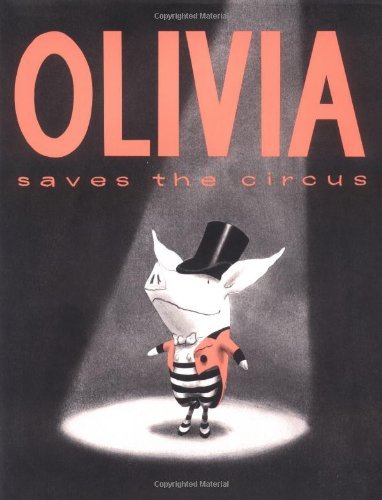
Oliva Saves the Circus, by Ian Falconer

The irrepressible Oliva charms us again as she spins a yarn for her class. She tells them that she went to a circus but that all of the performers were out sick "with ear infections." She was able to fill in for them...in ALL of the roles. Oliva the tattoo lady, lion tamer, and trampoline queen. It's fun to pretend along with her, and it's really hilarious when the teacher sees through her tall tale.


After the stories, we play "Clown Canon". (Hey...it's a good physics lesson!)


Kindergarten: Guiding Question - How can inferring help us understand a story better?

We continued to practice the skill of puzzling out a part of a story that the author hasn't directly told us. 


Billy and the Bad Teacher, written by Andrew Clements and illustrated by Elivia Savadier

Billy is a major rule-follower and it really irritates him when his teacher does things he's not supposed to do. So Billy decides to make a list of all of his teacher's transgressions and send the lists to some Very Important People! On the list? Chewing bubble gum, running in the halls, and falling asleep in a teachers' meeting, to name a few. But when it's time to send the list off to the Principal, Mayor, and US President, Billy has some doubts. What SHOULD the perfect teacher be like? His own answers surprise him!

Our inference task: Why doesn't Billy send the lists?


Blackout, by John Rocco

This recent Caldecott honor book shows a family's experience during a blackout. We infer many of the emotions of the night from the pictures. The youngest child in the family wants to play a game, but everyone is busy. After the blackout, they come together over candles and with their neighbors to share the excitement of the quiet dark city. 

When the lights come back on, little sister flicks them back off. Our inference task: Why does she?

Grade 1: Guiding Question - Who was Dave, the Potter? Who is Barak Obama?

This week, we looked at two African American men born 250 years apart. One is known only by his first name and was not famous during his own time. The other is the current US President.

I didn't realize these are illustrated by the same artist until I got into the story time!
Dave, the Potter, by Laban Carrick Hill and illustrated by Bryan Collier

Dave, a slave born in 1801, was a gifted potter. We watch him in his pottery shed as he moulds a lump of clay into a beautifully grand but simple jar. When it's finished, he signs it with his name, the date, and a short poem. One of the most engaging aspects of this story is the viewpoint the illustrator chooses: we're over Dave's shoulder or looking down directly at his hands as he works. It creates an intimate feeling giving us the sense we're part of the creation process.


Barack Obama, Son of Promise, Child of Hope, written by Nikki Grimes and illustrated by Bryan Collier

We learn about Barack Obama's childhood in Hawaii, his struggle to define himself, his family's value for education, the sadness he feels after his parents' divorce, and his final move into public policy and leadership. From an early age, he wanted to use his talents to help others. The illustrations are mixed media. 

In a story time setting, I cut parts of the story to move things along since it's a bit long for youngsters.


Grade 2: Guiding Question - What's a tall tale?

We watched a fantastic video about John Henry, the freed slave who blasted through a mountain to compete against the machinery brought in to do the railroad workers' jobs. Parts of his story have some truth to them, parts are exaggerated. This video shows the more truthful side.


John Henry and The Railroad from Whitestone Motion Pictures on Vimeo.


Grade 3: Guiding Question - How do we analyze a poem's rhythm?

This week, we studied rhythm in poetry and tried to unlock the key to how a poet creates rhythm from the words he or she chooses. To start us off, I read two poems with contrasting rhythms: "Lullaby for Suzanne" and "Shepard's Night Count", both found in X. J. Kennedy's Talking Like the Rain.

Here's the powerpoint I made to lead us through some concepts and practice. 

Next week, all grade 3 students will come to library time with a poem that has a clear rhyme scheme and a sense of rhythm. Students will read and discuss the poem in Photo Booth.

Grade 4 and Grade 5 checked out books as needed. Sometimes they come for reading workshop time, sometimes to read with buddies from younger grades, sometimes in pairs or threes for book recommendations or independent catalog searching. 

Checking out as needed = student ownership over their reading choices.