Showing posts with label tall tales. Show all posts

Saturday, April 20, 2013

The Circus, John Henry, and Inference practice

This was the week of the Boston Marathon bombing. I followed the news from home as much as possible, but it did not come up in conversation with students. Just as well; I trust those children who know the area are talking with their parents about it.

In the library, we continued with our various units. It was sunny (finally) and we shared lots of giggles and good stories.

PreK 3 and PreK 4: Guiding Question - What's a circus?


Circus!, by Peter Spier

The detailed pictures in this story make it best for one-on-one reading, but since it gives so much information, I use it as a "talk aloud" as we look at the pictures.

We learned about the work involved in packing, moving, unpacking, rehearsing, and performing. We also noticed how multicultural the circus troupe is: Japan, China, Hungary, Holland, New Zealand, Russia, India...so many countries are part of the story!

Oliva Saves the Circus, by Ian Falconer

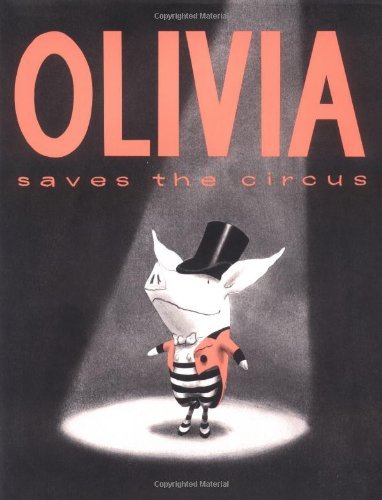
The irrepressible Oliva charms us again as she spins a yarn for her class. She tells them that she went to a circus but that all of the performers were out sick "with ear infections." She was able to fill in for them...in ALL of the roles. Oliva the tattoo lady, lion tamer, and trampoline queen. It's fun to pretend along with her, and it's really hilarious when the teacher sees through her tall tale.


After the stories, we play "Clown Canon". (Hey...it's a good physics lesson!)


Kindergarten: Guiding Question - How can inferring help us understand a story better?

We continued to practice the skill of puzzling out a part of a story that the author hasn't directly told us. 


Billy and the Bad Teacher, written by Andrew Clements and illustrated by Elivia Savadier

Billy is a major rule-follower and it really irritates him when his teacher does things he's not supposed to do. So Billy decides to make a list of all of his teacher's transgressions and send the lists to some Very Important People! On the list? Chewing bubble gum, running in the halls, and falling asleep in a teachers' meeting, to name a few. But when it's time to send the list off to the Principal, Mayor, and US President, Billy has some doubts. What SHOULD the perfect teacher be like? His own answers surprise him!

Our inference task: Why doesn't Billy send the lists?


Blackout, by John Rocco

This recent Caldecott honor book shows a family's experience during a blackout. We infer many of the emotions of the night from the pictures. The youngest child in the family wants to play a game, but everyone is busy. After the blackout, they come together over candles and with their neighbors to share the excitement of the quiet dark city. 

When the lights come back on, little sister flicks them back off. Our inference task: Why does she?

Grade 1: Guiding Question - Who was Dave, the Potter? Who is Barak Obama?

This week, we looked at two African American men born 250 years apart. One is known only by his first name and was not famous during his own time. The other is the current US President.

I didn't realize these are illustrated by the same artist until I got into the story time!
Dave, the Potter, by Laban Carrick Hill and illustrated by Bryan Collier

Dave, a slave born in 1801, was a gifted potter. We watch him in his pottery shed as he moulds a lump of clay into a beautifully grand but simple jar. When it's finished, he signs it with his name, the date, and a short poem. One of the most engaging aspects of this story is the viewpoint the illustrator chooses: we're over Dave's shoulder or looking down directly at his hands as he works. It creates an intimate feeling giving us the sense we're part of the creation process.


Barack Obama, Son of Promise, Child of Hope, written by Nikki Grimes and illustrated by Bryan Collier

We learn about Barack Obama's childhood in Hawaii, his struggle to define himself, his family's value for education, the sadness he feels after his parents' divorce, and his final move into public policy and leadership. From an early age, he wanted to use his talents to help others. The illustrations are mixed media. 

In a story time setting, I cut parts of the story to move things along since it's a bit long for youngsters.


Grade 2: Guiding Question - What's a tall tale?

We watched a fantastic video about John Henry, the freed slave who blasted through a mountain to compete against the machinery brought in to do the railroad workers' jobs. Parts of his story have some truth to them, parts are exaggerated. This video shows the more truthful side.


John Henry and The Railroad from Whitestone Motion Pictures on Vimeo.


Grade 3: Guiding Question - How do we analyze a poem's rhythm?

This week, we studied rhythm in poetry and tried to unlock the key to how a poet creates rhythm from the words he or she chooses. To start us off, I read two poems with contrasting rhythms: "Lullaby for Suzanne" and "Shepard's Night Count", both found in X. J. Kennedy's Talking Like the Rain.

Here's the powerpoint I made to lead us through some concepts and practice. 

Next week, all grade 3 students will come to library time with a poem that has a clear rhyme scheme and a sense of rhythm. Students will read and discuss the poem in Photo Booth.

Grade 4 and Grade 5 checked out books as needed. Sometimes they come for reading workshop time, sometimes to read with buddies from younger grades, sometimes in pairs or threes for book recommendations or independent catalog searching. 

Checking out as needed = student ownership over their reading choices.

Monday, April 15, 2013

Rhyming, Inferring, and Jane Goodall

We are back in the swing of things after spring break. Welcome back, everyone!

PreK 3 and 4: Guiding Question - What forest animals do we know? What are the parts of a story?

For this week's theme, we talked about forest animals and practiced telling stories of our own. We read two books, then I gave each child a card with an animal on it (from Prekinders.com). 

In pairs, they tried to tell a little story about the animal: Intro (who is it), Problem, Solution. This is an easy version of "Someone, Wanted, But, So, Then". The stories tended to go like this: "This is Joe the squirrel, and he needed nuts, and so...." and then it went on and on and never ended. But hey, it's a start!


The Terrible Plop, by Ursula Dubosarsky, illustrated by Andrew Joyner

This is a fun rhyming story about forest animals (including some jungle ones like monkeys) who are running from a terrible "plop" noise. The rabbits hear it first and soon a whole herd of different creatures are fleeing the scene. When they run into big brown bear, he doesn't believe anything could be scary enough to panic about, so he insists seeing what this "terrible plop" is all about. WE know what it is all along; this adds to the fun (dramatic irony!), as does a twist at the end.


Help! A Friendship Story, written and illustrated by Holly Keller

Mouse has heard that snakes are dangerous to mice. He's concerned about his friend, Snake. Hedgehog tells him not to worry, but Mouse worries anyway - so much that he doesn't look where he's going and falls into a hole. How's he going to get out? All of his other forest friends have various reasons why they can't help. Who'll save the day? You guessed it! 

This is fun and makes a good point about friendship (and how to say "thank you" after a good deed). I read Snake's part with a cowboy-style accent - it just seems to suit him.


Kindergarten: Guiding Question - What does "infer" mean? How can it help us understand a story?

Continuing with our "Story Strategies" unit, we learned that we can infer events in a story that the author hasn't explained to us. We gather clues to help us figure out what happened and make an inference, a smart guess, about parts of the story that the author hasn't actually written. This is a sophisticated concept, so we'll continue with this next week, too.


City Dog, Country Frog, by Mo Willems, illustrated by Jon Muth

City Dog meets Country Frog and they play together through spring, summer, and fall. When winter comes, however, frog is not in his usual spot. He's not there when the snow melts, either. Our inference task: What happened to him? 

This is a beautiful story, a testament to the talent of Mo Willems, famous for his hilarious Pigeon and Elephant & Piggie books. Here, the writing is spare and quiet. The illustrations, showing expressions of love, happiness, confusion, and sadness, complement the story perfectly.


Fireflies, written and illustrated by Julie Brickloe

Unlike the previous story, here the author tells us the events of the story but we need to infer the character's feelings. It's an example of "show not tell" writing; the actions and description of the character subtly reveal his emotions.

A boy joyfully captures a jar full of fireflies. When he sets them on his bedside table at home, however, their shining brightness seems to grow dim. He tearfully chooses to let them go, but why is he also smiling? 


Grade 1: Guiding Question - Who is Jane Goodall?

In our biography unit, we learned about Jane Goodall, someone who lives in the present. Talking about her and her early love of nature sparked lots of discussion. We pretended to be mini-researchers by watching some videos of chimpanzees and seeing what we could notice. Thank you, Animal Planet.


Me...Jane, written and illustrated by Patrick McDonnell

This is a charming story about Jane Goodall's childhood. From an early age, she loved to observe all aspects of the natural world and showed extraordinary patience in her observations.

This book is picture book perfection: font, paper, layout. Cartoony drawings lead us through a slow unfolding of Jane's deep curiosity and love of the natural world. Then, we feel dramatic surprise as we see how her dream of a life in Africa comes true. This gets an extra star for teary final page turn.


The Watcher, written and illustrated by Jeanette Winter

A second book about Jane fills in basic details of her adult life: how she first lived in Gombe National Park in Tanzania, what she discovered there, why she left, what her life's mission is now. There's a sense of fun throughout the story: she looks and looks for the chimps when she first arrives but can't see any, but we can see them looking at her. There's also a sense of the urgency of the problem threatening the extinction of chimps and a sense of the peace of mind Jane feels in the jungle.

The colorful graphic illustrations keep the tone light, but the text does not shy away from the drama of Jane's choices: her brave nights alone in the jungle, her difficult decision to leave, her close ties to a chimp who becomes a best friend.


Grade 2: Guiding Question - What are Tall Tales?


We had a treat this week and watched Paul Bunyan tales in DVD format. We have several good collections of tall tales, but none that felt just right for a story time. This does a good job of giving background information about what was happening in US history at the time of Paul Bunyan with clips explained by a cowboy character named "Curly Joe" and then cartoons of some of the outlandish stories told about Paul. 


Grade 3: Guiding Question - What rhyme schemes can we identify


We began a three-session poetry unit this week. The focus is on rhyme and rhythm, culminating in a recording of a poem and explanation of its rhyme scheme and analysis of its rhythm.

Here's the rhyme scheme powerpoint I made to help explain and give students some practice. Afterward, they continued with more independent practice with poems from Knock at a Star, by X. J. Kennedy and Dorothy Kennedy, my hands-down favorite book for teaching poetry.

Students got into the groove of being poetry detectives and enjoyed being able to figure out the pattern the poet used to create the rhyming effect.


Grade 4: Guiding Question - How do products from the rainforest impact the rainforest?

We finished up a mini-project this week in which students learned about rainforest products from a particular country and the impact of one of the products on the rainforest itself. Teachers loved these small rainforest posters for their classrooms during this unit.

This week, the task was to search for the impact of the growing and/or harvesting of the product. We learned that parentheses keep terms together in a search, so we entered our search like this: (rainforest destruction) + bananas, OR (rainforest destruction) + coffee.

Students needed to write one clear sentence about how the presence of that product has some impact on the rainforest. 

Sunday, February 27, 2011

Predicting, Tall Tales, and David Wiesner

Week 22
PreK 3 and PreK 4 - Guiding Question: What are some differences in versions of Old Mother Hubbard?
Old Mother Hubbard, by Jane Cabrera, makes the story of Old Mother Hubbard's quest to please her dog seem totally hilarious. The illustrations, done in thick swabs of paint, are bright and lively and give the characters playful expressions. Large-size painted text, one line per page, slows down the poem making this a good read-aloud for hearing students' observations along the way.  

Mother Hubbard's Cupboard, by Laura Rader, uses half-sheet pages to reveal funny surprises in the poem. When we turn the top half of the page, we find the cupboard bare, turn the bottom half and see the dog crying because "the poor dog had none." 


Finally, we read a rather gloomy version: Old Mother Hubbard, A Nursery Rhyme, by David A. Johnson. The illustrations feel old fashioned, suiting the time period of the poem, and the colors are muted to the point of being faded. This version follows the original poem exactly, so the humor is a bit dead pan: "She went to the baker's to buy him some bread, but when she came back, the poor dog was dead!" Although not our favorite, this was a great contrast to show differences among the three.

We also did two activities: Spot the problem in a picture of Old Mother Hubbard, and "Who has the bone?" in which students took turns hiding a bone and having others guess who had it.


Kindergarten - Guiding Question: What does it mean to "predict" events in a story?
Predicting is the same as guessing what will happen, and the act of guessing is more important than whether our guess comes true. Guessing shows that we are actively thinking as we listen or read - this is the key to being good readers! 

Two stories work well for teaching prediction. In The Little Mouse, the Red Ripe Strawberry, and the Big Hungry Bear, by Don Wood, the narrator questions the mouse about what he's doing. We are tempted to answer for the mouse based on our own predictions. When it turns out that the bear doesn't arrive, we have a fun surprise and see that guessing incorrectly doesn't hurt our enjoyment of the story at all! Use of this story was inspired by a lesson plan at Teacher Vision.

The second story, Lost and Found, by Oliver Jeffers, invites us to guess along with the main character about what the stray penguin really wants. The boy guesses that he's lost, but is he?


Grade 1 - Guiding Question: Which illustrator has won the most Caldecott medals? How does he work?
David Wiesner is a master illustrator who has won three gold medals and two silvers. We looked at several of his picture books, examining Tuesday most closely. After "reading" this wordless book, we followed Wiesner's creative process on his website. 


Grade 2 - Guiding Question: What are tall tales?

We learned a new word: hyperbole! We learned that tall tales started with a grain of truth and gradually became more and more exaggerated as they were retold over time. To illustrate the point, we played the old game "telephone" with each person whispering what they heard from the person before...the final saying varying greatly from the original. Likewise, tall tales are full of hyperbole.

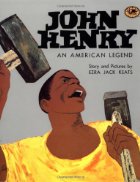
We have many tall tales in our library; we read two. John Henry, by Ezra Jack Keats, is a story in free verse with mixed media illustrations. Keats keeps it simple, focusing on the drama of the tunnel's cave-in and the contest of man v. machine, and he stuns us with the Henry's death at the end. This is a good tale to show how some tall tales contain more truth than others. 
In contrast, Kumak's Fish, by Michael Bania, is comical and far-fetched. Kumak uses a special fish hook and catches a fish so large that the entire village has to hold on to the line to keep Kumak from falling in. What a surprise to find that the big fish is actually a long line of fish, each holding on to the other to keep the first one from getting caught!


Grade 3 - Guiding Questions: How does knowing the difference between whole numbers and fractions help us understand shelf order in the Dewey section?
It was Dewey Game time this week with online games to help us put decimals in order, and shelf order cards to put in order, too. I made the shelf order cards from extra spine labels from Follett orders. (Thanks to "Tips and Bright Ideas," a column in LMC magazine for the idea). Some are easy to put in order, some are wickedly hard! Guess which one everybody wanted to try? 
 
For example...
Easy: 001, 102, 292, 398 
Medium: 398.2, 428.1, 573.7, 741.5, 808.1 
Hard: 509, 513.2, 523.8, 535.6
Wicked Hard: 551.21, 551.43, 551.48, 551.55, 551.6, 551.6911 


Grade 4 - Free library time, Dewey tour, and Historical fiction
Check-out, reading workshop, historical fiction tie-ins using websites via WebPath Express on Destiny (Mrs. M's class), and Dewey tour (Ms. L's class)

Grade 5 - Guiding Question: How can we shorten a URL for citations? 
As students worked with Citation Maker in their classrooms this week, they noticed that some of their URLs for images were exceedingly long! I added google URL Shortener to the grade 5 tab and showed students how to use it to put a shorter URL (web address) into their citation.