Showing posts with label story-strategies. Show all posts

Friday, May 10, 2013

Global Issues research, Mythology, Pirates!

PreK 3 and 4: Guiding Question - What do pirates do?

We read two pirate stories and made the point that even though pirates are fun characters, they are really "bad guys" since they steal other people's things! At check-out time, each child got a temporary pirate tattoo, just for fun.
How I Became a Pirate, by Melinda Long, illustrated by David Shannon

While playing on the beach, a boy notices a pirate ship approaching. The ship's captain notices the boy's excellent digging skills and recruits him to help them bury some treasure. But once he's on board and the excitement has died down, he realizes that pirate life is missing a few key elements.

David Shannon's signature boisterous illustrations add to the fun.

Tough Boris, by Mem Fox, illustrated by Kathryn Brown

Pirates are tough and mean and greedy, and Tough Boris is no exception. But when his pet parrot dies, even this pirate cries and cries. Finally a pirate we can relate to! 

Animated watercolor and pencil illustrations show us the action of life on a pirate ship.


Kindergarten: Guiding Question - How can inferring help us understand a story better?

This is a longer story told in letters and newspaper articles, so it's a tricky read-aloud. However, we "read" the illustrations as well as the text to discover the truth, so it's perfect for practicing our inference skills.


Dear Mrs. LaRue, by Mark Teague

Ike, Mrs. LaRue's dog, has misbehaved and is sent to doggy boarding school to learn some manners. He complains bitterly about this through a series of letters to his owner. Supported by some reports from the newspaper to give us an objective point of view, we eventually infer the whole story and see through his dramatic tale. The illustrations need to be "read" as well, since they help us guess at what's really happening.


Grade 1: Guiding Question - What text features help us find information?

First graders are starting an animal research project. They're creating a zoo in their classrooms, and they will be the animals! They'll need to know information about the foods they eat, where they live, and other interesting facts.


To start the process, we looked at basic nonfiction text features: Table of Contents, Glossary, Bold Words, Index, Headings, Labels. These help us find information more easily. We love the Blast Off Readers, which come in various levels, for primary research projects.

We also read One Tiny Turtle, by Nicola Davis. This gives us a chance to notice that nonfiction books can also come in a narrative form and look like a picture book.

Here, we follow a baby turtle as she grows, swims thousands of miles, and returns to lay her eggs on the beach where she first hatched. Will her babies be as lucky as she was? 


Grade 2: Guiding Question - What are myths?

We talked about the idea that myths explain something in nature or something about human nature. 

Daughter of the Earth, by Gerald McDermott

This Roman myth explains the seasons of the year. Prosperina is captured by the god of the underworld, Pluto, and her mother, Ceres, punishes the earth during her absence by refusing to let anything grow. Although Prosperina does eat some pomagrate seeds while in the underworld, sky god Jupiter negotiates her release: he subtracts the number of seeds she ate from the months of the year, so she only has to stay with Pluto for three months - our winter!


Atlantis, by Christina Balit

Richly illustrated in bright colors and gold leaf, this retelling of the myth of Atlantis is stunning and reads beautifully. We learn how Poseidon created the island, Atlantis, as a tribute to his mortal wife, Cleito, and gave it to his sons to rule over. Its citizens lived in peace and harmony, thankful for the many natural wonders Poseidon provided for them. But over time, the people began to bicker and become ambitious and greedy. Zeus, displeased, demanded Poseidon punish them, and so the entire island was swallowed up and sank to the bottom of the sea where, some say, it still resides. 

Dramatic and compelling, this makes an excellent read aloud for grades 2 and up - way up!

Grade 3: Guiding Question - What can we learn about a culture by reading its folklore?


Mrs. Chicken and the Hungry Crocodile, by Won-ldy Paye and Margaret Lippert, illustrated by Julie Paschkis

Mrs. Chicken's vanity gets her into trouble. While admiring herself in the reflection of the river, Crocodile captures her and plans to eat her up. Mrs. Chicken is clever and finds a way out of the bind. She learns her lesson and we have some laughs.

From the Dan people of Liberia. What lessons might the Dan have taught their children using this tale?


Mabela the Clever, retold by Margaret Read MacDonald, illustrated by Tim Coffey

Mabela, the mouse, has been taught to be clever due to her father's teachings. So when Cat tempts her and some other mouselings into joining a Secret Cat Society, she gradually becomes wary and suspicious. We're anxious to see how quickly she will figure out Cat's ruse. This tale wraps up with a meaningful reminder of the lessons: listen, look around, think about what you're saying, and move fast if needed!

From the Limba people of Sierra Leon. What other values does the story highlight? Pass down cleverness through the generations.


Grade 4: Check out!


Grade 5: Guiding Question - How do we get organized for a large research project?


Browsing in NewsBank

One class in grade 5 is undertaking an ambitious "global issues" project. They will research an issue of their choice, prepare an outline of their information, write a persuasive letter, and present their ideas in another form, too.


Steps we followed to get organized:
Sample note-taking sheet, step 2
- Create a google doc to store focus questions, Bibliographic information, and image links. (see my sample here)
- Explain our note-taking template.
- Explain how to use the note-taking template. (samples: step 1 - taking notes, step 2 - sorting information)
- All notes are done by hand (slows us down to ensure we're writing words and phrases vs. sentences)
- All notes are stored in a research binder.

Each research session follows the same format:
- Meet with group to brainstorm and assign focus questions for the day.
- Individual research time (quiet reading!)
- Wrap up with group to share information and choose focus for next session.

Resources we'll use to get started  with searching:
- Video: Web Searching
- Twurdy (google search by reading level)
- Newsbank for Kids (AISB students, see portal for password)
- Links on the grade 5 page, "Global Issues" section 

Monday, May 6, 2013

Digital Timelines, Zoo stories, Inference, and Asian Folktales

PreK 3 and 4: Guiding Question - What's a zoo?

Most of our children had been to a zoo and so we named animals found there. We read fun zoo stories.


Put Me in the Zoo, by Robert Lopshire

This helps us understand the difference between a zoo and a circus. A zoo has animals that stand around; a circus has animals that do tricks!

In this funny early reader, a leopard-type animal wants to live in the zoo. He tries to prove he's worthy by doing tricks with his spots: changing the colors, throwing them around, and making them fly into the sky. Is the zoo really the best place for him?


Goodnight, Gorilla, by Peggy Rathmann

This mostly wordless book had us in a fit of giggles. The zookeeper says goodnight to the gorilla and the gorilla promptly steals the keys to all of the cages. He trails behind the zookeeper on his rounds and lets out all of the other animals. When the zookeeper arrives home and gets ready for bed, all of the animals follow him into the house and into the bedroom. The mishap, discovered by his night-capped wife, is hilarious.


Z is for Moose, by Kelly Bingham, illustrated by Paul O. Zelinsky

Moose can't wait for his turn to show up on the "M" page of this alphabet book. I mean he really CAN'T wait! He keeps showing up on other pages, interrupting, and eagerly asking "now?" When page "M" comes and it's given to Mouse instead, poor Moose really loses his cool. Happily, he gets a part in the end.


Kindergarten: Guiding Question - How does inferring help us understand a story better?

My Lucky Day, by Keiko Kasza

This turns our assumptions upside down. Pig comes to Fox's door by mistake, we think, and barely escapes being eaten by Fox. Along the way, we marvel at Pig's cleverness. He's certainly a quick thinker! When Fox is about to roast him in a pan, he suggests that Fox wash him first because he's dirty. Pig gets a nice hot bath...isn't HE lucky.

Inference task: What is Pig's overall plan?

Me and You, by Anthony Browne

The traditional Goldilocks tale is told here with a twist that asks us to re-examine our perception of Goldi. The story is set in a city, with the Bear family living in a lovely home in the suburbs. Golidlocks' story is told only through pictures. In a series of black, white, and sepia tones we see her running through the city, notice that she's lost in a rough part of town, and follow her into the Bears' house to find food and shelter.

Inference task: In this version, why does Goldilocks go into the Bears' home?


Grade 1: Guiding Question - Who was Wilma Rudolph? How do the famous people we've read about look on a timeline?

To end our picture book biography unit, we revisited the people we've read about on a digital timeline. Some entries have video clips, and there are a few "new" entries: the estimated time our great-grandparents lived, our grandparents, our parents, ourselves, our future children? 

Wilma Unlimited: The World's Fastest Woman, by Kathleen Krull, illustrated by David Diaz

We ended with a powerful story about Wilma Rudolph, who grew up as a sickly child in Tennessee in the 1940's and became a three-time medal winner as a runner in the Rome Olympics. Her ability to overcome polio through sheer grit and determination makes for a compelling read-aloud. 

This author visited our school in the fall and we had fun remembering our visit with her illustrator husband, Paul Brewer.


Grade 2: Guiding Question - Who was Lady Godiva?

After last week's bloody dragon slaying story, we went with a gentle legend this week.

Godiva, by Lynn Cullen, illustrated by Kathryn Hewitt

Lady Godiva was a kind-hearted woman who cared for the health and well-being of the townspeople who farmed and set up shops on her husband's land. When he raised their taxes to earn more money to beautify the castle, she angrily asked him to reconsider. He jokingly replied that he'd lower taxes when she rode naked through the streets. She took this as a challenge. The response of the villagers makes for a tear-jerker ending.


Grade 3: Guiding Question - What is traditional literature? What can we guess about a culture's values from its stories?

The Crane Wife, retold by Odds Bodkin, illustrated by Gennady Spirin

Richly illustrated in a traditional Japanese style, this is the story of a poor sail maker who meets his soul mate. She comes to him a year after he has rescued a crane, his favorite kind of bird. After they marry, he learns that she can weave magic sails that carry the wind. She agrees to weave for him, but only if he promises not to look at her while she works. He promises, but such promises are hard to keep.

Students identified the lessons learned: the danger of greed and the importance of keeping a promise.

Note: This makes a good read-aloud, but there are three places where there are no pictures. Photocopying text-heavy pages lets me read and show the wordless pictures to students at the same time.

The Empty Pot, by Demi

Set in China, this folktale teaches us the importance of honesty. An Emperor holds a contest to see which child in the land will grow the most beautiful flower. Whoever wins will become the next Emperor. Our main character is sure he will win; he's a very skilled gardener. But when the seed the Emperor gave him simply does not grow, he's forced to bring an empty pot to the final reveal. Sure he will be punished, he tearfully describes his efforts and shows the empty pot. It's a fun surprise to hear why the Emperor chooses HIM as the winner!

Grade 4 and 5 came for check out.

Monday, April 29, 2013

Inferring, Tadpole-ing, Reciting, Dragon-slaying

PreK 3 and 4: Guiding Question - How do frogs grow?

Our weekly theme was "frogs" and there are lots of fun stories to choose from for this.


Growing Frogs, by Vivian French, illustrated by Alison Bartlett

A girl and her mother experiment with growing frogs. They bring home some of the eggs from the pond, put them in a tank, and watch and talk about what they observe. 

The information in this narrative nonfiction story is just the right amount for toddlers, and the illustrations are clear and cheery.


DVD: Seasons (Weston Woods)
Polliwog and Caterpillar, by Jack Kent

Caterpillar brags about her upcoming metamorphosis, and Polliwog is very happy for her. He learns that he, too, will be changing, but he's not sure what he'll become. He cheerfully waits for her transformation and while he's waiting...oh look what happens!


Kindergarden: Guiding Question - How does inferring help us understand a story better?


Click, Clack, Moo, by Doreen Cronin

The cows learn to type and use their new skill to demand better treatment from the farmer. The farmer is not giving in to their demands, so they go on strike: no milk! Eventually a negotiation yields them some success, but what about the farmer? He's still in a pickle. 

Inference task: What happened that put him back where he started?


Another Brother, by Matthew Cordell

This story perfectly captures the complexities of being the oldest sibling. Davy is blissfully alone with his parents for four years, but then siblings strike. They're all brothers (12 of 'em) and all the time they copy him and follow him around. Will he ever get some peace? Adorable line drawings with lots of detail and expression add to our picture of Davey's plight.

Inference task: How does Davy really feel about being the oldest and most copied sibling?


Yo! Yes?, by Chris Raschka

Two boys navigate those first moments of a possible friendship: the "want to be my friend?" that's so hard to express. Raschka's illustrations capture the tension of the moment: one boy so outgoing and ready to take a risk, the other's body language showing his fear and self-doubt. This would make a good story for the beginning of the year in our school where one-third of our students are new each year.

Inference task: "read" the pictures and expressions to describe the boys' feelings.


Grade 1: Guiding Question - Who was Josef Albers?


An Eye for Color, by Natasha Wing, illustrated by Julia Breckenreid

We learned about Josef Albers, who grew up in a coal-mining town in Germany and was fascinated by art from an early age. He experiments with many media but eventually came to study colors and the effect of their interactions with each other. 
http://www.albersfoundation.org/


Afterward, students looked at a website showing many of Albers' famous "color squares" and shared what they noticed about them.

Which colors "pop" or fade for you?


Grade 2: Guiding Question - What is the story of George and the Dragon?


Saint George and the Dragon, retold by Margaret Hodges, illustrated by Trina Schart Hymen

This tells the legend of St. George, the Red Cross Knight, and Una, the princess who finds him. She's been on a quest to find someone to save her village from a vicious dragon. The depth of description is powerful and story of how the dragon and George trade blows is intense.

Although longer than what we usually read in grade 2, the writing and illustrations are captivating, plus it's a bit gory. Beautiful use of border artwork and finely detailed faces make this story come alive. I was impressed with how well everyone followed the action of this classic tale.


Grade 3: Guiding Question - How can we read a poem with expression and show our understanding of rhyme and rhythm?


As a culminating activity, students came prepared to read a poem chosen for effective rhyme and rhythm. We talked about how to read with expression:

- follow the punctuation, not the line breaks to avoid a "sing-songy" feel.
- read for understanding, to communicate the ideas of the poem.
- use a variety of tones (vs. monotone)
- use an even volume
- use facial expressions (smile! frown!) to suit the poem.

As an example, I read "Doll", by Myra Cohn Livingston, two times: in a "regular" way, and then with expression that helped convey the story of the poem. 

Students practiced reading in pairs, wrote notes about the rhyme scheme and rhythm of their poem, and then recorded it all into Photo Booth. We used a "one take" rule since this was not meant to be a polished project, just a snapshot at the end of this mini-unit.

Here's an example of a student's "one take."


Grade 4 and 5 came to check out.


Saturday, April 20, 2013

The Circus, John Henry, and Inference practice

This was the week of the Boston Marathon bombing. I followed the news from home as much as possible, but it did not come up in conversation with students. Just as well; I trust those children who know the area are talking with their parents about it.

In the library, we continued with our various units. It was sunny (finally) and we shared lots of giggles and good stories.

PreK 3 and PreK 4: Guiding Question - What's a circus?


Circus!, by Peter Spier

The detailed pictures in this story make it best for one-on-one reading, but since it gives so much information, I use it as a "talk aloud" as we look at the pictures.

We learned about the work involved in packing, moving, unpacking, rehearsing, and performing. We also noticed how multicultural the circus troupe is: Japan, China, Hungary, Holland, New Zealand, Russia, India...so many countries are part of the story!


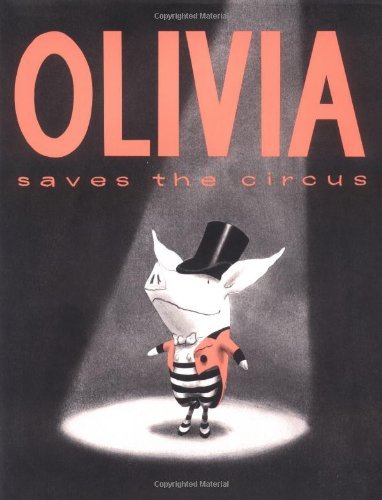
Oliva Saves the Circus, by Ian Falconer

The irrepressible Oliva charms us again as she spins a yarn for her class. She tells them that she went to a circus but that all of the performers were out sick "with ear infections." She was able to fill in for them...in ALL of the roles. Oliva the tattoo lady, lion tamer, and trampoline queen. It's fun to pretend along with her, and it's really hilarious when the teacher sees through her tall tale.


After the stories, we play "Clown Canon". (Hey...it's a good physics lesson!)


Kindergarten: Guiding Question - How can inferring help us understand a story better?

We continued to practice the skill of puzzling out a part of a story that the author hasn't directly told us. 


Billy and the Bad Teacher, written by Andrew Clements and illustrated by Elivia Savadier

Billy is a major rule-follower and it really irritates him when his teacher does things he's not supposed to do. So Billy decides to make a list of all of his teacher's transgressions and send the lists to some Very Important People! On the list? Chewing bubble gum, running in the halls, and falling asleep in a teachers' meeting, to name a few. But when it's time to send the list off to the Principal, Mayor, and US President, Billy has some doubts. What SHOULD the perfect teacher be like? His own answers surprise him!

Our inference task: Why doesn't Billy send the lists?


Blackout, by John Rocco

This recent Caldecott honor book shows a family's experience during a blackout. We infer many of the emotions of the night from the pictures. The youngest child in the family wants to play a game, but everyone is busy. After the blackout, they come together over candles and with their neighbors to share the excitement of the quiet dark city. 

When the lights come back on, little sister flicks them back off. Our inference task: Why does she?

Grade 1: Guiding Question - Who was Dave, the Potter? Who is Barak Obama?

This week, we looked at two African American men born 250 years apart. One is known only by his first name and was not famous during his own time. The other is the current US President.

I didn't realize these are illustrated by the same artist until I got into the story time!
Dave, the Potter, by Laban Carrick Hill and illustrated by Bryan Collier

Dave, a slave born in 1801, was a gifted potter. We watch him in his pottery shed as he moulds a lump of clay into a beautifully grand but simple jar. When it's finished, he signs it with his name, the date, and a short poem. One of the most engaging aspects of this story is the viewpoint the illustrator chooses: we're over Dave's shoulder or looking down directly at his hands as he works. It creates an intimate feeling giving us the sense we're part of the creation process.


Barack Obama, Son of Promise, Child of Hope, written by Nikki Grimes and illustrated by Bryan Collier

We learn about Barack Obama's childhood in Hawaii, his struggle to define himself, his family's value for education, the sadness he feels after his parents' divorce, and his final move into public policy and leadership. From an early age, he wanted to use his talents to help others. The illustrations are mixed media. 

In a story time setting, I cut parts of the story to move things along since it's a bit long for youngsters.


Grade 2: Guiding Question - What's a tall tale?

We watched a fantastic video about John Henry, the freed slave who blasted through a mountain to compete against the machinery brought in to do the railroad workers' jobs. Parts of his story have some truth to them, parts are exaggerated. This video shows the more truthful side.


John Henry and The Railroad from Whitestone Motion Pictures on Vimeo.


Grade 3: Guiding Question - How do we analyze a poem's rhythm?

This week, we studied rhythm in poetry and tried to unlock the key to how a poet creates rhythm from the words he or she chooses. To start us off, I read two poems with contrasting rhythms: "Lullaby for Suzanne" and "Shepard's Night Count", both found in X. J. Kennedy's Talking Like the Rain.

Here's the powerpoint I made to lead us through some concepts and practice. 

Next week, all grade 3 students will come to library time with a poem that has a clear rhyme scheme and a sense of rhythm. Students will read and discuss the poem in Photo Booth.

Grade 4 and Grade 5 checked out books as needed. Sometimes they come for reading workshop time, sometimes to read with buddies from younger grades, sometimes in pairs or threes for book recommendations or independent catalog searching. 

Checking out as needed = student ownership over their reading choices.

Monday, April 15, 2013

Rhyming, Inferring, and Jane Goodall

We are back in the swing of things after spring break. Welcome back, everyone!

PreK 3 and 4: Guiding Question - What forest animals do we know? What are the parts of a story?

For this week's theme, we talked about forest animals and practiced telling stories of our own. We read two books, then I gave each child a card with an animal on it (from Prekinders.com). 

In pairs, they tried to tell a little story about the animal: Intro (who is it), Problem, Solution. This is an easy version of "Someone, Wanted, But, So, Then". The stories tended to go like this: "This is Joe the squirrel, and he needed nuts, and so...." and then it went on and on and never ended. But hey, it's a start!


The Terrible Plop, by Ursula Dubosarsky, illustrated by Andrew Joyner

This is a fun rhyming story about forest animals (including some jungle ones like monkeys) who are running from a terrible "plop" noise. The rabbits hear it first and soon a whole herd of different creatures are fleeing the scene. When they run into big brown bear, he doesn't believe anything could be scary enough to panic about, so he insists seeing what this "terrible plop" is all about. WE know what it is all along; this adds to the fun (dramatic irony!), as does a twist at the end.


Help! A Friendship Story, written and illustrated by Holly Keller

Mouse has heard that snakes are dangerous to mice. He's concerned about his friend, Snake. Hedgehog tells him not to worry, but Mouse worries anyway - so much that he doesn't look where he's going and falls into a hole. How's he going to get out? All of his other forest friends have various reasons why they can't help. Who'll save the day? You guessed it! 

This is fun and makes a good point about friendship (and how to say "thank you" after a good deed). I read Snake's part with a cowboy-style accent - it just seems to suit him.


Kindergarten: Guiding Question - What does "infer" mean? How can it help us understand a story?

Continuing with our "Story Strategies" unit, we learned that we can infer events in a story that the author hasn't explained to us. We gather clues to help us figure out what happened and make an inference, a smart guess, about parts of the story that the author hasn't actually written. This is a sophisticated concept, so we'll continue with this next week, too.


City Dog, Country Frog, by Mo Willems, illustrated by Jon Muth

City Dog meets Country Frog and they play together through spring, summer, and fall. When winter comes, however, frog is not in his usual spot. He's not there when the snow melts, either. Our inference task: What happened to him? 

This is a beautiful story, a testament to the talent of Mo Willems, famous for his hilarious Pigeon and Elephant & Piggie books. Here, the writing is spare and quiet. The illustrations, showing expressions of love, happiness, confusion, and sadness, complement the story perfectly.


Fireflies, written and illustrated by Julie Brickloe

Unlike the previous story, here the author tells us the events of the story but we need to infer the character's feelings. It's an example of "show not tell" writing; the actions and description of the character subtly reveal his emotions.

A boy joyfully captures a jar full of fireflies. When he sets them on his bedside table at home, however, their shining brightness seems to grow dim. He tearfully chooses to let them go, but why is he also smiling? 


Grade 1: Guiding Question - Who is Jane Goodall?

In our biography unit, we learned about Jane Goodall, someone who lives in the present. Talking about her and her early love of nature sparked lots of discussion. We pretended to be mini-researchers by watching some videos of chimpanzees and seeing what we could notice. Thank you, Animal Planet.


Me...Jane, written and illustrated by Patrick McDonnell

This is a charming story about Jane Goodall's childhood. From an early age, she loved to observe all aspects of the natural world and showed extraordinary patience in her observations.

This book is picture book perfection: font, paper, layout. Cartoony drawings lead us through a slow unfolding of Jane's deep curiosity and love of the natural world. Then, we feel dramatic surprise as we see how her dream of a life in Africa comes true. This gets an extra star for teary final page turn.


The Watcher, written and illustrated by Jeanette Winter

A second book about Jane fills in basic details of her adult life: how she first lived in Gombe National Park in Tanzania, what she discovered there, why she left, what her life's mission is now. There's a sense of fun throughout the story: she looks and looks for the chimps when she first arrives but can't see any, but we can see them looking at her. There's also a sense of the urgency of the problem threatening the extinction of chimps and a sense of the peace of mind Jane feels in the jungle.

The colorful graphic illustrations keep the tone light, but the text does not shy away from the drama of Jane's choices: her brave nights alone in the jungle, her difficult decision to leave, her close ties to a chimp who becomes a best friend.


Grade 2: Guiding Question - What are Tall Tales?


We had a treat this week and watched Paul Bunyan tales in DVD format. We have several good collections of tall tales, but none that felt just right for a story time. This does a good job of giving background information about what was happening in US history at the time of Paul Bunyan with clips explained by a cowboy character named "Curly Joe" and then cartoons of some of the outlandish stories told about Paul. 


Grade 3: Guiding Question - What rhyme schemes can we identify


We began a three-session poetry unit this week. The focus is on rhyme and rhythm, culminating in a recording of a poem and explanation of its rhyme scheme and analysis of its rhythm.

Here's the rhyme scheme powerpoint I made to help explain and give students some practice. Afterward, they continued with more independent practice with poems from Knock at a Star, by X. J. Kennedy and Dorothy Kennedy, my hands-down favorite book for teaching poetry.

Students got into the groove of being poetry detectives and enjoyed being able to figure out the pattern the poet used to create the rhyming effect.


Grade 4: Guiding Question - How do products from the rainforest impact the rainforest?

We finished up a mini-project this week in which students learned about rainforest products from a particular country and the impact of one of the products on the rainforest itself. Teachers loved these small rainforest posters for their classrooms during this unit.

This week, the task was to search for the impact of the growing and/or harvesting of the product. We learned that parentheses keep terms together in a search, so we entered our search like this: (rainforest destruction) + bananas, OR (rainforest destruction) + coffee.

Students needed to write one clear sentence about how the presence of that product has some impact on the rainforest. 

Thursday, March 14, 2013

St. Patrick's Day and Habitats with Switch Zoo

PreK 3 and 4: Guiding Question - How do people celebrate St. Patrick's Day?


Gail Gibbons is a good author to choose for introducing a new idea with little ones. In this concept book, we highlighted the key points: shamrocks, leprechauns, rainbows with pots of gold, and of course, St. Patrick who brought the teachings of God to Ireland in 400 C.E.

Afterward, students drew pictures of what they remembered from the story. These will be added to their pictures from last week to create a "story time" journal.

Kindergarten: Guiding Question - How can we identify the problem in a story?


We talked about problems in stories we know and agreed that it's easier to retell a story if we can state the problem. We practiced with some stories we've read so far (The Carrot Seed, for example). 

Then we read some Kevin Henkes books. As we read, I kept asking, "Is there a problem yet?


Once the problem came up, it was CLEAR:

Uh-oh. 
The other kids don't think Chrysanthemum's name is absolutely perfect. 

Uh-oh. 
Mr. Slinger is upset with Lily and she's upset with him.

Grade 1: Guiding Question - Who was St. Patrick?

Patrick: Patron Saint of Ireland, by Tomie dePoala 

Patrick (not his original name) was kidnapped by the Irish from his home in Britain. Life as a slave sheep-herder caused him to turn to God and he prayed incessantly. He heard voices in dreams telling him to escape, then to return to Ireland and bring God's wisdom to the people there. The Irish loved him so much; he was made a saint after his death on March 17. 

This is a good version for youngsters: just the right amount of detail and it includes some of the legends about St. Patrick at the end which gives us a chance to talk about facts versus stories that have become exaggerated over time. (As we did with Johnny Appleseed).

Grade 2: Guiding Question - What's a folk tale? 


The Irish folk tale about the giant Finn MacCoul and his nemesis, Culcullin makes a great read-aloud. We read the version retold and illustrated by Roberty Byrd, but there is also a great one by Tomie dePoala.

Finn MacCoul is a giant in Ireland, but he fears an even bigger giant, Culcullin, will be able to beat him in a duel.  Finn tells his wife about the threat, and his wife uses her cunning to trick Culcullin into running away from Finn!

It's that time in the year when grade 2 students are ready for longer stories. As the trick on Culcullin unfolds, it's fun to see students light up as they realize how he's been duped.


Grade 3: Guiding Question - How can we find a location on a map using clues from different thematic maps?


This was a fun and challenging lesson. Each student created an imaginary animal using SwitchZoo. They chose a habitat for the animal, and then created clues to see if a partner could guess its coordinates. 

After printing the animal, students glued a clue card onto their paper to help them construct their clues. The clue card is at the end of this document. The clues were information from different thematic map keys. 

For example, my animal lives in a grassland habitat. It lives in Australia in an area with fewer than 2 people per kilometer, and in an area that has stock raising, and a climate of dry summer. The elevation near its home is 200-500 meters above sea level.

Grade 4: Guiding Question - What poetry terms do we know?

This is the same poetry "flip book" lesson with a different class. See the full lesson here.